
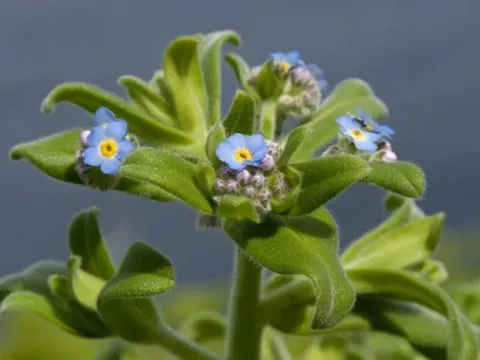
Sea forget-me-not
Myosotis maritima
Sea forget-me-not (Myosotis maritima) belongs to the Boraginaceae family. Seeds are typically sown in late spring once the threat of frost has passed and the soil has warmed sufficiently for germination.
What the section contains
Sea forget-me-not
For indoor propagation, seeds should be sown in late winter or early spring. Surface sowing is essential as the seeds require exposure to light for successful germination, so they should only be lightly pressed into the soil.
Maintain a consistent soil moisture level and a temperature range between 15 and 20 degrees Celsius. Germination usually occurs within two to three weeks under optimal environmental conditions.
Transplanting seedlings to their final location is recommended when they reach a height of 5-8 centimeters. Space the plants about 20 centimeters apart to ensure proper airflow and minimize disease risk.
Direct autumn sowing is also a viable option in milder climates. This mimics natural cycles and allows the seeds to undergo winter stratification, leading to earlier spring blossoms.
This species thrives in sunny locations but is highly tolerant of partial shade. As the name suggests, it is well-adapted to coastal environments, demonstrating excellent resistance to salt-laden winds.
Well-drained, sandy or loamy soils are ideal for this plant. While it is not overly demanding, adding organic matter to the soil helps improve moisture retention without causing waterlogging.
Moderate irrigation is necessary during the flowering period, but it is critical to avoid soggy ground. Proper drainage is the most important factor in the long-term health of the plant.
Occasional fertilization with a balanced, water-soluble fertilizer can enhance flower production. Avoid excessive nitrogen, which tends to promote leafy growth rather than vibrant blooms.
The plant is hardy in many climates but benefits from a light layer of mulch during winter in colder regions. This protects the crown from extreme temperature fluctuations and frost heaving.
Aphids are the primary pest concern, often clustering on the tender new growth and flower buds. Control them using insecticidal soap or by introducing natural predators like ladybugs.
Powdery mildew is a common fungal threat, characterized by a white, dusty appearance on the foliage. To prevent this, ensure proper spacing between plants to maintain good air circulation.
Slugs and snails can cause significant damage to young plants. Implementing physical barriers such as crushed eggshells or copper tape around the planting area can effectively deter these pests.
Root rot occurs if the soil remains constantly saturated. If signs of wilting appear despite adequate moisture, inspect the root system and improve the drainage immediately to prevent further loss.
Regular sanitation, such as removing dead or dying plant material, is crucial to prevent the build-up of fungal pathogens and pests, keeping the planting bed healthy throughout the season.