
Russian comfrey
Symphytum peregrinum
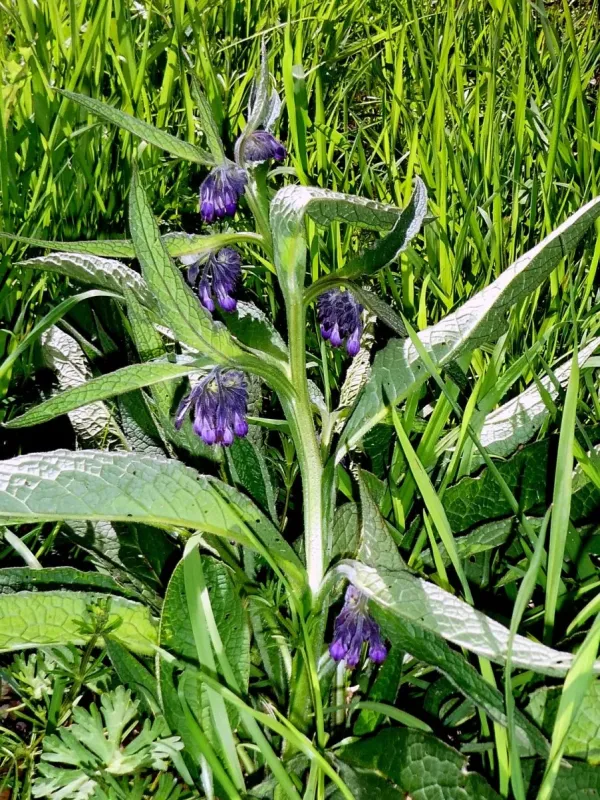
Description
Sowing dates
Russian comfrey is a perennial herb typically propagated through vegetative means, such as root cuttings or plant division, as seed propagation is often unreliable for this hybrid. Planting is best performed in early spring or autumn when soil moisture is sufficient to support establishment.
To propagate by root cuttings, segments approximately 5–10 centimeters long are buried horizontally in prepared soil. Adequate spacing of at least 60–70 centimeters is essential to accommodate the plant's expansive root system and rapid leaf growth.
The first year of cultivation is focused on root development, during which the plant exhibits slow growth above ground. Full-scale harvest of biomass usually becomes viable from the second growing season onwards, once the clumps have reached sufficient maturity.
Site selection should prioritize fertile, deep soils that avoid waterlogged conditions. Once established, comfrey patches are incredibly durable and can persist for over a decade without the need for replanting, making them a long-term asset in managed fields.
For large-scale cultivation, the area must be cleared of perennial weeds before planting. Because comfrey is a competitive plant, maintaining clean rows during the first year is the only labor-intensive phase of its long-term lifecycle.
Growing requirements
Belonging to the Boraginaceae family, Russian comfrey is a highly adaptable hybrid. It thrives in deep, fertile loams that can retain significant moisture while remaining well-drained, as it dislikes stagnant water around the crown.
The plant is known for its deep taproot, which mines nutrients and water from lower soil strata. This trait makes it exceptionally resilient to short periods of drought and allows it to perform well even in soils where other shallower crops might fail.
Comfrey is an extremely "hungry" plant that responds exceptionally well to organic matter. Regular applications of compost or manure are recommended to sustain high biomass yields, as the plant extracts substantial levels of nitrogen and potassium from the soil.
In terms of climate, it is a hardy species capable of surviving cold winters in temperate zones. It begins active growth very early in the spring, allowing it to take advantage of seasonal moisture and provide early-season forage or mulch material.
While it tolerates partial shade, maximum yield is achieved in full sun. Proper soil aeration is key; the plant performs best in soils with a pH between 6.0 and 7.0, and liming may be necessary if the soil is excessively acidic.
Yield
Russian comfrey is world-renowned for its incredible biomass production, capable of yielding up to 5–6 cuts per season in optimal conditions. This makes it a premier choice for farmers seeking high volumes of organic material from a small land area.
The nutritive value of the leaves is high, rich in proteins, vitamins, and minerals. It serves as an excellent supplemental feed for livestock, including cattle and poultry, when introduced into their diet in controlled quantities.
Beyond its use as fodder, the foliage is highly valued in regenerative agriculture for creating high-potassium liquid fertilizers. Its fast decomposition and nutrient-rich profile make it an ideal green manure for soil improvement.
Silage production using comfrey is also effective when the leaves are wilted or mixed with dryer, fibrous materials to balance the moisture content. This prevents spoilage and preserves the nutrients for winter feeding programs.
The economic efficiency of comfrey is anchored in its longevity. Once the system is set up, maintenance costs are minimal compared to annual crops, as the plant's dense foliage acts as a natural mulch that suppresses encroaching weeds.
Main diseases and pests
Powdery mildew is the most common disease affecting Russian comfrey, particularly in dense plantings with poor airflow or high humidity. Ensuring proper plant spacing is the most effective cultural control for mitigating this issue.
Pests like slugs and snails can be problematic for young shoots during the spring. In organic systems, manual removal or creating physical barriers around the root crowns is often sufficient to prevent serious damage to the developing plants.
Leaf rust can occur in environments with erratic temperature swings. If an infection is identified, the standard protocol is to harvest and remove the affected foliage immediately to prevent the spread of fungal spores to healthy parts of the patch.
Bacterial crown rot is a rare but severe threat usually linked to poor soil drainage. By selecting sites that do not flood and maintaining a well-structured soil, the risk of crown rot is reduced to negligible levels for the average grower.
Russian comfrey is remarkably resistant to most common agricultural pests, which significantly reduces the need for synthetic chemical inputs. Its natural vigor is usually sufficient to recover from minor pest pressures without external intervention.
Harvesting
The prime window for harvesting comfrey for both feed and mulch is the early flowering stage. At this point, the nutrient content, particularly the protein and potassium levels in the leaves, is at its absolute peak for biological availability.
Mechanical harvesting is feasible using rotary mowers; however, because the leaves are succulent and mucilaginous, equipment should be set to a height of about 5–8 centimeters to ensure the crown is not damaged and can regenerate quickly.
When harvesting for forage, direct feeding is preferred due to the difficulty of drying the high-moisture leaves for hay. If intended for winter feed, it should be processed into silage or composted to ensure that its nutritional value is captured.
Final harvests of the season must be timed at least a month before the first hard frost. This ensures that the plant does not expend its remaining energy stores on leaf growth, but rather redirects them into the root system for winter survival.
Efficient post-harvest management is required, as the cut leaves decompose very rapidly. Farmers should ensure that the biomass is utilized shortly after mowing to prevent the loss of nutrients through leaching or premature decay in the field.