
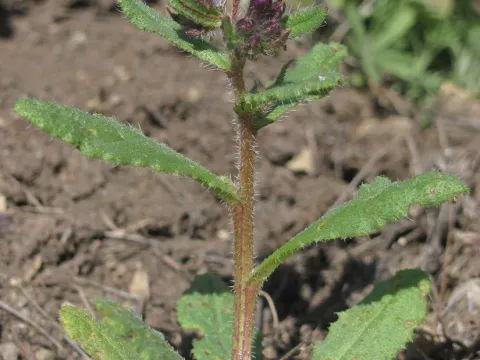
Small alkanet
Anchusa pusilla
Small alkanet (Anchusa pusilla) belongs to the Boraginaceae family and is an herbaceous plant noted for its specific adaptation to arid environments.
What the section contains
Small alkanet
The propagation of this species is primarily seed-based, requiring natural vernalization to ensure high germination rates in the subsequent growing season.
In agricultural settings, seeds are typically sown in late autumn, allowing the winter cold to break seed dormancy and initiate the germination process.
For spring sowing, it is critical to use fresh seeds or those that have been stratified under controlled low-temperature conditions for several weeks.
The sowing depth should be kept shallow, approximately one centimeter, to ensure the small seeds have sufficient energy to reach the soil surface.
The crop requires well-drained, sandy, or stony soils, as it is highly susceptible to root damage caused by waterlogging or soil compaction.
Anchusa pusilla exhibits high tolerance to drought, utilizing its deep taproot system to access subsurface moisture during prolonged dry spells.
Exposure to full sunlight is essential for the plant to maintain its structural integrity and achieve optimal biomass production during the season.
Nutrient requirements are relatively low, but the presence of adequate calcium levels in the soil substrate significantly improves overall plant vigor.
Maintaining a neutral to slightly alkaline pH is recommended, as this matches the natural ecological niche of the species in its endemic regions.
Fungal pathogens represent the primary biological threat, particularly in regions where humidity levels remain high during the spring growth phase.
Powdery mildew is a common issue that manifests as a dusty white coating on leaves, interfering with transpiration and light absorption.
Insects, particularly sap-sucking pests like aphids, can colonize the developing inflorescences, causing stunted growth and reducing seed viability.
Slug and snail damage is prevalent in seedlings, making perimeter protection or mechanical control necessary during the early stages of establishment.
Integrated pest management strategies focusing on early detection and physical barriers are preferred to maintain the health of the plant population.