
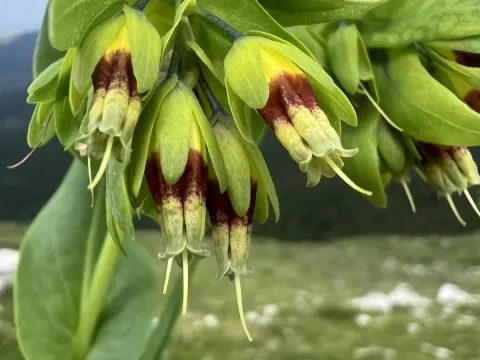
Smooth honeywort
Cerinthe glabra
Cerinthe glabra, known as the smooth honeywort, is a herbaceous perennial member of the Boraginaceae family. It is natively distributed in the subalpine and alpine regions of Central and Southern Europe, where it thrives in high-altitude environments.
What the section contains
Smooth honeywort
Sowing should ideally occur in late autumn or early spring, as the seeds require a period of stratification to break dormancy. Without exposure to cold temperatures, germination rates remain significantly low.
The seeds should be sown at a shallow depth of approximately 1–2 centimeters in well-draining, mineral-rich soil. Freshly harvested seeds are preferred for maximum viability, as the seed bank of this species is relatively short-lived.
During the first year, the plant allocates energy to establishing its root system and forming a basal rosette of leaves. Robust growth above the ground is usually observed starting from the second year of cultivation.
For field production, precise spacing is necessary to ensure adequate airflow between plants, which is crucial for preventing fungal issues in the dense leaf clusters.
The smooth honeywort prefers calcareous, rocky soils that mimic its natural mountainous habitat. Excellent drainage is non-negotiable; waterlogged soil will quickly lead to root decay and overall plant failure.
The plant performs best in cooler climates with high light intensity. If cultivated in lower altitudes, providing partial shade during the peak of summer is advisable to prevent heat stress and desiccation.
Nutrient requirements are modest. Over-fertilization, particularly with nitrogen, can lead to spindly growth and reduced flower production, making the plant more susceptible to lodging and pests.
Soil moisture levels must be maintained consistently but without saturation. An organic mulch layer can help regulate soil temperature and moisture levels, especially in regions with inconsistent rainfall.
Proper ventilation is key to keeping the plants healthy. Site selection should avoid low-lying areas where cold air or moisture can pool, as this significantly increases the risk of disease.
The primary threats include slugs and snails, which can devastate young seedlings in a single night. Implementing physical barriers or safe molluscicides is essential for successful stand establishment.
Fungal pathogens such as root rots are common where drainage is poor. Regularly inspecting the basal part of the plant and adjusting irrigation regimes can effectively mitigate these risks.
Powdery mildew may appear on the foliage in humid, stagnant air conditions. Improving plant spacing and promoting better airflow are the most sustainable ways to prevent outbreaks.
Aphids can occasionally colonize the tender flower stems, potentially spreading viral diseases. Early detection and localized treatment with insecticidal soaps usually keep populations at non-damaging levels.
Maintaining a healthy growing environment through appropriate site selection and moisture management is the most effective way to defend the crop against biotic and abiotic stress factors.