
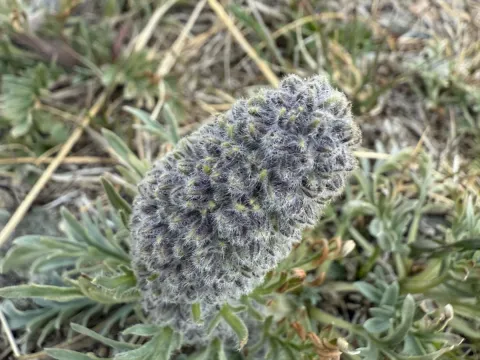
Silky phacelia
Phacelia sericea
Sowing of Phacelia sericea in temperate regions is typically carried out in early spring, as soon as the soil warms up to positive temperatures. The seeds possess excellent germination rates, so the sowing depth should be maintained at only 1-2 cm.
What the section contains
Silky phacelia
To establish a uniform stand, a row-sowing method with spacing of approximately 15-20 cm is practiced. When utilized as a decorative element, late autumn sowing is possible to achieve early flowering in the following season.
It is important to consider soil density, as deep and loose tilth is beneficial for root development. In light soils, sprouts emerge uniformly, providing rapid surface cover to suppress potential weed competition.
The seeding rate is calculated based on the intended purpose: lower density is used for honey production, while higher density is preferred for producing dense green manure. Approximately 8-10 kg of seeds per hectare is optimal.
After sowing, the field should be rolled to ensure close contact between the seeds and the moist soil. This procedure accelerates germination and increases the overall homogeneity of the crop stand.
Silky phacelia belongs to the Hydrophyllaceae family and is a cold-hardy plant native to high-altitude regions of North America. It demonstrates remarkable tolerance to temperature fluctuations and alpine conditions.
The plant thrives in well-drained, light soils, including rocky or sandy substrates. Waterlogging is detrimental to the crop; therefore, areas with high groundwater levels are unsuitable for its cultivation.
For active growth and the development of its characteristic purple inflorescences, high solar intensity is required. In shaded locations, the plant tends to stretch, and the density of flowering decreases significantly.
The crop is not demanding regarding soil fertility and can develop on nutrient-poor substrates, making it a promising candidate for land reclamation. Mineral fertilizers are rarely required unless the goal is maximal biomass production.
Due to its biological resilience, Phacelia sericea successfully adapts to harsh environments, proving its endurance against strong winds and limited availability of nutrients in the soil profile.
In agricultural practice, the biomass yield of silky phacelia depends on the soil quality and moisture availability. On average, the plant is capable of producing a significant amount of vegetative mass within one season.
As a nectar-producing plant, it is highly valued for its long flowering period and high sugar content in its nectar. Apiaries often see stable honey yields when situated near fields sown with this crop.
When used as a cover crop, the phacelia biomass decomposes rapidly, enriching the soil with organic matter and improving its overall structure. This significantly enhances the yields of subsequent crops in the rotation.
Seed productivity remains stable, but it requires timely harvesting, as the seeds tend to shatter upon reaching full maturity. Proper timing is crucial to maximize seed collection per hectare.
The overall economic efficiency of the crop is defined by its dual purpose: as a soil improver and as an essential source of high-quality pollen and nectar for various pollinators.
The primary threats to silky phacelia in intensive farming environments are fungal diseases caused by excessive soil moisture. Root rot can occur during periods of prolonged water stagnation.
Pests such as aphids may occasionally affect young shoots during periods of active growth. Regular monitoring of the field allows for early intervention and effective control of local infection pockets.
Crucifer beetles and certain types of weevils may occasionally damage the leaf blades, which slows down plant development. However, the high growth energy of the plant often allows it to overcome minor damage.
Weeds are the main competitors during the initial stages of vegetation. Before the rows close, mechanical weeding is recommended to ensure the purity of the crop and prevent nutrient competition.
Disease prevention relies primarily on practicing crop rotation and avoiding excessive irrigation. Maintaining optimal soil drainage is the most effective strategy for ensuring a healthy crop.
Harvesting for green manure is best performed during the peak flowering phase, when the plant has accumulated the maximum amount of nutrients. Incorporation is achieved via disking or cultivation.
For seed collection, harvesting should commence when the majority of seed pods darken. It is critical to avoid over-ripening to prevent yield losses due to natural seed shattering in the field.
Mowing as a cover crop is most effective before full seed formation. This practice prevents uncontrolled self-seeding and ensures the field remains clear for the next primary crop.
When harvesting for honey-production support, it is vital to respect the activity schedule of pollinators. Operations should be conducted during morning or evening hours to minimize stress to bees.
After harvesting, plant residues should be left on the surface for a short period before being deep-ploughed into the soil, ensuring the effective enrichment of the topsoil layer with organic material.