
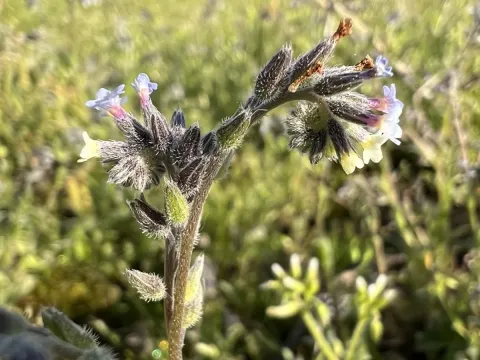
Changing forget-me-not
Myosotis discolor
The changing forget-me-not (Myosotis discolor) is a herbaceous annual plant belonging to the Boraginaceae family. It is distinct due to its unique petal color changes as the flowers mature, often transitioning from yellow to blue or pink.
What the section contains
Changing forget-me-not
Sowing typically occurs in early spring or autumn. Seeds require minimal covering as they need a degree of light to germinate effectively. The optimal soil temperature for germination ranges from 12 to 18 degrees Celsius.
Space the seeds appropriately to allow for sufficient airflow, which is critical in preventing fungal development. In professional cultivation or garden settings, rows should be spaced at least 20 cm apart.
Once established, the plant is known for its ability to self-seed, making it a low-maintenance choice for naturalistic meadow landscapes or rock gardens where biodiversity is encouraged.
When sowing in trays for later transplanting, use a light, well-draining substrate. Ensure the seedlings are hardened off before moving them to a permanent outdoor location to ensure survival against temperature fluctuations.
This species thrives in temperate climates that offer moist, cool growing seasons. It is highly adaptable but performs best in locations that provide protection from the harsh midday summer sun.
The ideal soil is moderately fertile, humus-rich, and well-drained. While it tolerates various soil types, avoid heavy clay soils that retain excessive water, as this can lead to root system decay.
Moisture management is key; the plant prefers consistent soil moisture but should never be waterlogged. Regular, shallow watering during dry spells is more effective than infrequent, heavy irrigation.
Sunlight requirements are flexible, ranging from full sun in cooler northern regions to partial shade in warmer climates. Shade helps extend the flowering period, which usually lasts from mid-spring to early summer.
Fertilization is rarely necessary if the soil is healthy. If the plants appear weak, a diluted liquid compost can be applied during the early growth stages to support vegetative development.
Powdery mildew represents the most significant fungal threat, especially in seasons with high humidity and poor air circulation. It manifests as a white, dusty layer on the leaves and stems.
Aphids are the primary insect pest, often clustering on the undersides of leaves or near the flowering buds. Their feeding can cause curling and stunted growth if left unmanaged for an extended period.
Root rots are commonly associated with poor drainage or overwatering. Maintaining a proper soil structure and ensuring that the planting site is elevated or properly sloped can mitigate these risks effectively.
Slugs and snails can consume young foliage rapidly. Using organic deterrents or creating physical barriers around the planting area is standard practice for protection against these mollusks.
To ensure long-term health, monitor plants weekly for early signs of distress. Removing affected plant material immediately is the best way to prevent the spread of infections throughout the garden beds.