
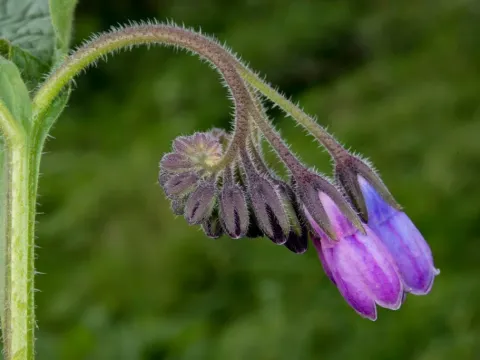
Comfrey hybrid
Symphytum hybrids
Hybrid comfrey (Symphytum × uplandicum) is a robust perennial herb belonging to the Boraginaceae family. It is a highly productive plant known for its vigorous growth and ability to serve as a cornerstone in sustainable agricultural systems.
What the section contains
Comfrey hybrid
Because the hybrid produces very few viable seeds, it is exclusively propagated through vegetative division. Gardeners and farmers typically divide mature root crowns or plant root cuttings, which are highly resilient and establish quickly in moist soil.
The ideal time for planting is early spring, once the soil has warmed up and can be easily worked. Autumn planting is also successful in milder climates, allowing the roots to settle and develop before the onset of the next growing season.
When establishing a plantation, space the plants at least 60–70 cm apart between rows to accommodate their large, spreading foliage. This spacing ensures adequate airflow and provides enough room for the plant to reach its full size.
Young plants require consistent moisture during the first few months. Once established, the extensive root system of the comfrey hybrid makes the plant remarkably independent, often surviving dry spells that would damage other garden crops.
Hybrid comfrey thrives in fertile, moisture-retentive soils with good drainage. While it is tolerant of various soil types, it performs best in rich loam or clay-based soils that have a neutral to slightly acidic pH level.
The plant is exceptionally hardy and can withstand freezing winter temperatures, with the foliage naturally dying back and the roots remaining dormant until spring. This cycle allows it to survive in diverse climatic zones with minimal protection.
Sun exposure is key to maximizing biomass production. Although comfrey is capable of growing in partial shade, full sun promotes denser foliage and more frequent growth cycles, which is essential for maximizing the yield of green manure.
One of the unique features of the comfrey hybrid is its ability to mine minerals from deep within the soil profile. Its taproot can reach depths of several feet, pulling up potassium and other essential nutrients that are otherwise inaccessible.
Regular applications of organic compost help maintain productivity over several years. Due to its nutrient-dense nature, the plant essentially recycles minerals back into the soil when the leaves are used as mulch or fertilizer.
Hybrid comfrey is legendary for its biomass production, often yielding 3 to 4 harvests per season. Its leaves are rich in proteins and minerals, making them an excellent choice for supplementary animal feed, especially for ruminants and poultry.
In organic gardening, comfrey is widely used to create liquid fertilizers or teas. By soaking the harvested leaves in water for a few weeks, farmers obtain a potent, potassium-rich liquid feed that is ideal for promoting fruit and flower development.
The crop also plays a significant role in medicinal applications, as the roots and leaves contain allantoin. This compound is known for its ability to support tissue repair, making comfrey a staple in traditional herbal preparations for external use.
When used as a mulch, the harvested foliage breaks down quickly to improve soil structure and suppress weeds. It is a preferred species in permaculture designs for creating a closed-loop fertility system on small to medium-sized farms.
As a melliferous plant, comfrey attracts pollinators throughout the summer. The long, bell-shaped flowers provide a consistent food source for bees, indirectly benefiting all fruit-bearing crops in the vicinity of the plantation.
Hybrid comfrey is remarkably resistant to most agricultural pests and diseases. Its coarse, hairy leaves act as a deterrent for many common insects that might otherwise damage more sensitive vegetable varieties.
Powdery mildew is the most common issue, typically appearing during periods of high humidity and poor air circulation. While it can cause the leaves to look unsightly, it rarely kills the plant or significantly impacts the root system.
Root rot can occur if the plant is forced to grow in waterlogged, stagnant conditions. Ensuring proper drainage is the most effective preventative measure against fungal issues related to the soil and root health.
Aphids may occasionally colonize the tender young flower stems, but they rarely reach levels that require chemical treatment. Simple mechanical removal or a strong spray of water is usually sufficient for managing localized infestations.
Good agricultural management, such as regular harvesting and the removal of debris, prevents the buildup of pathogens and ensures that the plantation remains healthy and vigorous for many years.
The timing of the harvest is critical for maximizing nutrient content. The first cut is best taken just as the plant begins its flowering phase, as this is when the mineral concentration in the leaves is at its peak.
Subsequent cuts should be performed every 4 to 5 weeks depending on the growth rate. Constant harvesting prevents the plant from becoming overly woody and ensures that it continuously pushes out new, nutrient-dense green growth.
For medicinal purposes, the roots should be harvested in late autumn after the foliage has naturally faded. At this stage, the plant has stored its energy and active compounds within the root system for winter survival.
Harvested foliage can be dried in the shade for winter use or applied immediately as a fresh mulch. Drying should be done away from direct sunlight to preserve the volatile components and essential nutrients within the plant tissues.
Always use sharp tools to cut the foliage cleanly at the base. This minimizes mechanical injury to the crown and helps the plant recover rapidly, maintaining its productivity throughout the entire growing season.