
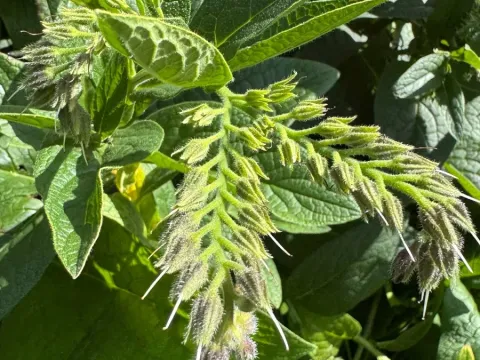
Comfrey
Symphytum L.
Comfrey (Symphytum L.) is a robust perennial member of the Boraginaceae family, primarily propagated through root cuttings rather than seeds due to low germination rates.
What the section contains


Comfrey
The ideal time for planting root cuttings is in early spring once the soil is workable or in the early autumn to ensure the roots establish well before winter.
Root segments, ideally 10 to 15 centimeters long, should be planted horizontally about 10–12 centimeters deep in rows spaced 60–70 centimeters apart.
If choosing to grow from seed, sow in the autumn to allow for natural cold stratification, which significantly improves the success rate of sprouting in spring.
Young plants should be kept weed-free during their first season to allow the root system to become established enough to compete with surrounding vegetation.
Comfrey is famously adaptable, thriving in a wide range of soil types, though it performs best in deep, fertile, moisture-retentive soils rich in organic matter.
It prefers sunny to semi-shaded positions and is highly valued in permaculture for its ability to mine deep-seated nutrients using its extensive taproot system.
The plant is quite indifferent to soil pH, showing excellent growth across various conditions, provided that the soil is not prone to total waterlogging.
While comfrey is drought-tolerant once mature, consistent moisture levels during the growing season will significantly boost biomass production.
Site selection should be permanent, as the plant is extremely difficult to remove once established due to its deep, regenerative root structure.
Comfrey is highly productive, capable of producing 3 to 4 substantial harvests of foliage per growing season under favorable conditions.
It is widely used in sustainable gardening as a high-potassium liquid fertilizer, made by steeping leaves in water, or as a nutrient-dense green manure.
The nutritional profile of the leaves makes them an excellent fodder supplement for livestock, providing essential minerals and proteins when harvested young.
In terms of biomass, well-managed patches can produce massive amounts of organic matter, exceeding many other perennial green manure crops per square meter.
Historically and currently, it is also harvested for its medicinal properties, specifically the compound allantoin, which is used in topical wound-healing salves.
Comfrey is relatively resistant to pests and diseases, though it may occasionally suffer from powdery mildew in areas with poor airflow and high humidity.
Slugs and snails can be minor nuisances, particularly for younger plants during wet spring weather, though mature plants usually outgrow this threat.
Root rot can occur if the plant is situated in heavy, poorly drained soil, which is why proper site selection is essential for long-term health.
Maintaining clear ground around the base of the plant during the early growth stages is the best practice to prevent competition and pest harborages.
Generally, comfrey requires minimal intervention, and pest populations are rarely high enough to justify the use of synthetic chemical treatments.
Harvesting should be timed when the plant is in the budding stage to capture the highest concentration of nutrients and minerals within the leaves.
Cut the foliage back to roughly 5 centimeters above the soil level; this encourages rapid regrowth and multiple cuts throughout the season.
For liquid fertilizer use, leaves should be harvested in dry weather and allowed to wilt slightly before being processed into a tea or infusion.
Care should be taken to use sharp tools, ensuring clean cuts that prevent the entry of pathogens into the crown of the plant.
Always cease harvesting at least 4 to 6 weeks before the first hard frost to allow the plant to store energy in its roots for successful dormancy.