
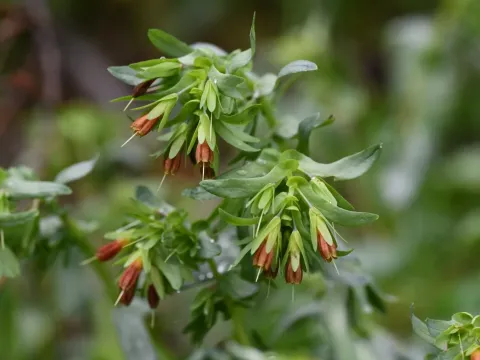
Cerinthe tenuiflora
Cerinthe tenuiflora
Cerinthe tenuiflora is an annual herbaceous plant, typically sown in spring when soil temperatures reach 10–12°C. In temperate climates, sowing in April ensures robust development before the peak of summer heat.
What the section contains
Cerinthe tenuiflora
Fields should be well-lit with well-drained soil. Seeds are sown at a depth of 2–3 centimeters with row spacing of 30–45 centimeters to provide adequate space for plant growth and to minimize competition for sunlight.
In regions with late springs, nursery-raised seedlings are often used to accelerate flowering. Seedlings are transplanted after the last frost to ensure the delicate young plants are not damaged by cold temperatures.
Maintaining optimal planting density is crucial; overcrowding leads to leggy stems and reduced nectar output. A density of 10–15 plants per square meter is considered ideal for healthy plant development.
The plant demonstrates a strong ability for self-seeding under favorable weather conditions, which often leads to consistent natural re-establishment in fields over several consecutive seasons without extra labor.
The plant thrives in sunny locations protected from strong winds, as the slender floral stems are susceptible to physical damage. It belongs to the Boraginaceae family and shows significant ecological plasticity.
Soil requirements include light, fertile loamy or sandy soils with a neutral or slightly alkaline pH. Drainage is essential, as waterlogging in the root zone quickly leads to rot and plant failure.
Cerinthe tenuiflora is moderately drought-tolerant; however, it requires consistent moisture during the flowering phase to maintain high nectar sugar concentrations. Excessive wetness can lead to nectar dilution.
To maximize yields, apply complex mineral fertilizers during the budding stage. A formulation rich in potassium and phosphorus helps develop sturdy stems and promotes a longer flowering duration.
Temperatures between 20–25°C are ideal for the physiological processes of the plant. It does not perform well during extreme temperature fluctuations or periods of high humidity coupled with cold weather.
The primary threats are fungal diseases caused by excessive air and soil moisture. Root rot is a common issue when soil aeration is poor, emphasizing the need for proper site preparation.
Pests typically include aphids and spider mites, which feed on tender leaves and shoots. Severe infestations can deform the inflorescences, rendering them less attractive to pollinators.
Preventative measures center on strict crop rotation and avoiding dense planting. Good ventilation between plants significantly lowers the risk of pathogen spread throughout the growing season.
Insecticide use should be strictly managed or prohibited during flowering to protect honeybee populations. Biological control agents are preferred to maintain the ecological integrity of the crop.
Regular monitoring of the field allows for early detection of pest or disease outbreaks, enabling localized management strategies that protect the overall yield while reducing chemical usage.
The agricultural use of Cerinthe tenuiflora is primarily directed toward beekeeping. The plant provides a steady supply of nectar over a flowering period lasting approximately six weeks.
For seed harvesting, crops should be gathered when the seed pods have turned dark. Harvesting must be timed precisely to prevent premature shattering, as the seeds disperse easily once fully ripe.
After collection, seed lots should be dried in shaded, well-ventilated areas to preserve germination vigor. Proper storage conditions involve cool, dry, and stable temperatures.
Post-harvest plant residues can be incorporated into the soil as green manure, provided the plants are free of disease. This practice contributes to soil organic matter and fertility improvement.
Mechanical harvesting is often limited due to uneven ripening, making manual or semi-mechanized harvesting the standard practice to ensure high seed quality and purity for the next planting cycle.