
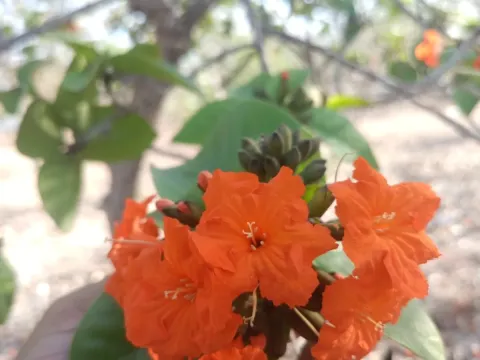
Ciricote
Cordia dodecandra
Ciricote (Cordia dodecandra) is a prominent tree species belonging to the Boraginaceae family. It is recognized for its broad canopy and can reach heights between 10 and 30 meters depending on environmental conditions.
What the section contains
Ciricote
Native to Central America, particularly Mexico, Belize, and Guatemala, the species is perfectly adapted to tropical environments with distinct dry and rainy seasons. It thrives in high-temperature zones.
The tree prefers well-drained, lime-rich soils. Due to its natural habitat on the Yucatan Peninsula, it has developed a high level of tolerance for rocky, calcium-heavy substrates and periods of drought.
Climate requirements include constant warmth, as the species is sensitive to frost. An ideal environment provides temperatures consistently ranging between 22 and 30 degrees Celsius throughout the year.
For agricultural establishment, early care is crucial. While mature trees are robust, saplings require protection from aggressive weeds and consistent monitoring of soil moisture during the establishment phase.
Ciricote is world-renowned for its exceptionally high-quality wood. Its distinct spider-webbing grain patterns and dense structure make it a highly sought-after material for fine furniture and professional musical instruments.
The tree also produces edible, bright orange drupes. These fruits are locally consumed, often used to produce jams, desserts, and various refreshing beverages in the regions where the tree grows.
Production cycles are inherently long-term. Commercially viable timber is only produced after decades of growth, requiring owners to adopt a patient approach to silviculture and forest management.
Fruit yields can be inconsistent and are heavily influenced by climate patterns, specifically rainfall levels during the flowering period, which impact the success of natural pollination.
Integration into agroforestry systems allows for a diverse income stream, combining immediate fruit harvests with the long-term investment of timber production.
Root rot, often caused by waterlogged soils, is a major threat to the health of the tree. Ensuring proper soil drainage is the most effective preventative measure against fungal complications.
Wood-boring beetles represent a significant risk to timber quality. These insects can damage the inner wood structure, significantly reducing the market value of the harvested logs.
Mechanical damage to the bark, whether from maintenance equipment or animals, can serve as an entry point for various pathogens and pests, weakening the tree structure over time.
Leaf spots and other foliar diseases may appear during periods of intense humidity. Regular inspection and the removal of affected branches help prevent the spread of these issues.
Over-harvesting remains a critical threat to wild populations. Sustainable farming and plantation establishment are essential to preserve the species while meeting global demand for its unique wood.