
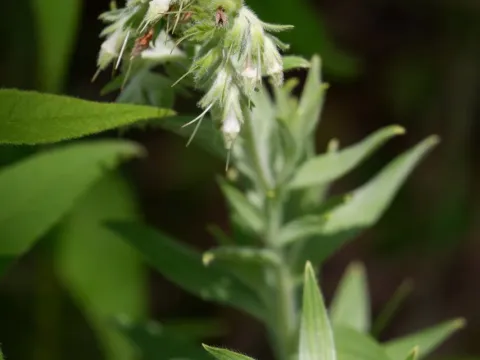
Lithospermum molle
Lithospermum molle
Lithospermum molle is a resilient herbaceous perennial belonging to the Boraginaceae family, often valued for its unique botanical properties.
What the section contains
Lithospermum molle
Sowing should take place in the autumn to allow for natural cold stratification of the seeds, which significantly improves germination rates in the spring.
The seeds require light, well-draining soil to sprout effectively, with a planting depth not exceeding one or two centimeters.
Row spacing should be maintained between 30 and 40 centimeters to ensure adequate airflow and space for the plant's mature canopy.
Early stage weed control is essential, as the young seedlings are slow to establish and can easily be outcompeted by aggressive weeds.
This crop thrives in sunny, open locations, as full solar exposure is critical for the development of its secondary metabolites.
Lithospermum molle prefers alkaline or neutral soils, particularly those with a high lime content, mimicking its native rocky habitat.
Excellent soil drainage is a fundamental requirement; the plant is highly sensitive to waterlogging, which can lead to rapid root rot.
While the plant shows significant drought tolerance once established, maintaining moderate soil moisture during the first year is recommended.
It does not require intensive fertilization, as it is adapted to nutrient-poor, mineral-rich soils common in calcareous regions.
The most significant threats to Lithospermum molle involve fungal pathogens that thrive during periods of high humidity and poor ventilation.
Root-related issues often stem from improper irrigation practices, such as excessive watering or poor soil structure that lacks adequate drainage.
In terms of pests, aphids and certain foliage-feeding insects can cause damage during the active growing season, requiring regular field scouting.
- Implementing strict field hygiene.
- Rotating crops to prevent soil-borne pathogen buildup.
- Applying preventative fungal treatments during rainy seasons.
The overall health of the crop depends on maintaining a balance between moisture and drainage to prevent physiological stress.