
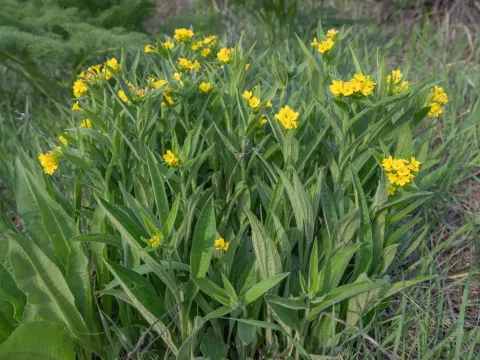
Macrotomia
Macrotomia
Macrotomia is a perennial plant typically propagated by seeds. Successful germination requires careful preparation, as the seeds often exhibit dormancy and benefit significantly from stratification—a period of cold, moist conditions—prior to planting in the spring.
What the section contains

Macrotomia
The ideal planting site should have finely tilled soil. Seeds are sown at a shallow depth of approximately 1 to 2 centimeters. Because the seeds are small, it is essential to ensure they are pressed firmly into the soil surface to facilitate moisture uptake during the initial growth stages.
Early-stage growth is characterized by the formation of a leaf rosette. During this period, the plant is highly vulnerable to weed competition, necessitating manual or mechanical weed control to ensure the crop has sufficient access to sunlight and soil nutrients.
Spacing between rows should be maintained at 45 to 60 centimeters to allow for healthy root development and to simplify maintenance tasks. Proper planting density is crucial to balance individual plant growth with overall field productivity.
In the first year, energy is directed into root establishment. Growers should avoid harvesting during this phase to allow the plant to accumulate the necessary chemical compounds that define its commercial value in later years.
Belonging to the Boraginaceae family, Macrotomia is naturally adapted to open, sunny environments. The plant shows remarkable resilience to dry conditions, making it an excellent candidate for regions with limited rainfall, provided the soil characteristics are suitable.
Well-drained, light-textured soils such as sandy loams are preferred. The plant is notoriously sensitive to waterlogging; therefore, avoiding heavy, clay-rich soils or areas prone to flooding is essential to prevent root rot and ensure crop survival.
The optimal pH range for Macrotomia is neutral, generally between 6.5 and 7.5. Soil testing and necessary amendments should be performed prior to planting to achieve these levels, as extreme acidity or alkalinity can inhibit plant vigor.
Temperature requirements are consistent with moderate climates. While the species can withstand cold winters, it is critical that the ground does not remain saturated with water during the dormant season, as this combination increases the risk of mortality.
Soil fertility requirements are relatively modest, though potassium-rich fertilizers can be beneficial. These nutrients help improve root quality and the accumulation of secondary metabolites, which are the plant's main economic asset.
The economic utility of Macrotomia centers on its roots, which are highly valued for their high concentrations of shikonin and related pigments. These compounds serve as both pharmaceutical ingredients and natural dyes for high-end textiles and cosmetics.
Maximum yields and high concentrations of active ingredients are typically achieved by the third or fourth year of growth. Harvesting before this maturity point usually results in lower quality and lower quantities of extractable substances.
Under optimal management, yields can range from 1.5 to 3 tons of dried root per hectare. The quality of the final product is determined by the intensity of the color and the concentration of the active ingredients, which must be carefully preserved through proper processing.
Post-harvest processing includes cleaning the roots to remove soil, followed by controlled drying. This step is delicate, as the pigments are sensitive to high heat and prolonged exposure to UV light.
Marketing prospects are promising, especially in the growing demand for natural, non-toxic coloring agents in the global cosmetic and healthcare industries, allowing producers to tap into value-added markets.
The primary agronomic threats to Macrotomia are fungal pathogens, specifically those causing root rot, which are often exacerbated by poor drainage. Preventing stagnant water is the most effective way to minimize these risks.
Soil-dwelling pests like wireworms can cause significant damage to young plants. Implementing a robust crop rotation strategy is necessary to break the pest cycle and improve soil health over the long term.
Leaf-feeding insects may pose minor challenges during dry, hot summers, but these are generally less devastating than soil-based issues. Regular field scouting is recommended to address pest pressures early.
Weed management remains the most persistent challenge, as the plant grows relatively slowly. Using mulch or specialized weed control equipment helps keep competition low without damaging the developing roots.
Disease prevention is managed through the use of certified, healthy plant material and adherence to strict sanitation protocols during all stages of cultivation and harvesting.
Harvesting takes place in the autumn, once the top growth has naturally withered. This timing ensures that the plant has mobilized its energy reserves into the roots, maximizing the pigment content.
Mechanical harvesting is generally used, requiring specific equipment settings to reach deep enough to extract the roots without breakage. Every broken root represents a direct loss of high-value liquid extract.
Immediately after lifting, the roots are cleaned of soil. Excessive washing or prolonged soaking should be avoided, as the active pigments can be partially water-soluble, which would result in color loss.
The roots are then cut into manageable sections and moved to drying facilities with high airflow. Maintaining a consistent temperature below 50°C ensures that the chemical structure of the medicinal compounds remains stable.
Dried product should be stored in dark, cool, and well-ventilated conditions. Exposure to light and humidity must be avoided to prevent the degradation of the pigments and to maintain the shelf life of the raw material.