
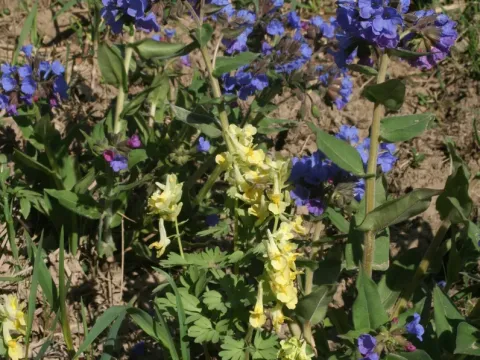
Lungwort
Pulmonaria L.
Lungwort (genus Pulmonaria) belongs to the Boraginaceae family. In agricultural practice, it is primarily propagated by dividing mature clumps, usually performed in late summer after the plant has finished flowering.
What the section contains
 Bethlehem sage
Pulmonaria saccharata Mill.
Bethlehem sage
Pulmonaria saccharata Mill.
 Long-leaved lungwort
Pulmonaria longifolia (T. Bastard) Boreau x Pulmonaria saccharata Mill.
Long-leaved lungwort
Pulmonaria longifolia (T. Bastard) Boreau x Pulmonaria saccharata Mill.
 Lungwort
Pulmonaria officinalis L.
Lungwort
Pulmonaria officinalis L.
 Narrow-leaved lungwort
Pulmonaria angustifolia L.
Narrow-leaved lungwort
Pulmonaria longifolia (T. Bastard) Boreau
Narrow-leaved lungwort
Pulmonaria angustifolia L.
Narrow-leaved lungwort
Pulmonaria longifolia (T. Bastard) Boreau
 Pulmonaria mollis
 Wulfen
Pulmonaria mollis
Pulmonaria mollis Wulfen
 Red lungwort
Pulmonaria rubra Schott
Red lungwort
Pulmonaria rubra Schott
Lungwort
Seed propagation is also viable but requires a period of cold stratification to break seed dormancy and ensure successful germination, which is typically managed in cold frames or direct sowing in autumn.
When planting, division units should be spaced approximately 30 cm apart. This density prevents overcrowding and competition for nutrients, ensuring that each plant develops a robust root system for future growth.
The planting process should be done in cool conditions to minimize moisture loss. Ensuring that the crown of the plant is placed at the soil surface is vital to prevent rot in the rootstock.
As a perennial crop, Lungwort remains productive for many years, provided the soil remains fertile and the plant is divided every few years to keep the vigor of the planting stock high.
This crop thrives in partial to full shade. Direct exposure to intense sunlight is detrimental to Lungwort, causing foliage scorch and reducing the concentration of active medicinal compounds.
The soil must be moisture-retentive, rich in organic matter, and well-drained. A slightly acidic to neutral pH is optimal for maximizing nutrient uptake and supporting healthy leaf development.
Adequate water supply is crucial during the growing season. While Lungwort is relatively hardy, prolonged drought will result in stunted growth and a significant decrease in total biomass yield.
Regular fertilization with compost or balanced organic fertilizers in early spring helps promote the vigorous growth of leaves, which are the primary harvest target for this medicinal herb.
Mulching is a key agricultural practice for this crop, as it keeps the roots cool, retains moisture, and suppresses weed growth, which is essential given the plant's shallow root system.
The economic utility of Lungwort lies in the harvesting of its leaves and flowers, which are valued in traditional medicine for their anti-inflammatory properties and respiratory health benefits.
The best time to harvest is during the peak flowering stage. During this period, the plant contains the highest concentration of tannins, flavonoids, and other biologically active substances.
Yields are stable under proper management, with consistent green biomass production. Professional growers aim to harvest before the leaves show signs of aging or infection by powdery mildew.
Plants are capable of secondary growth after a light harvest. However, to maintain the longevity of the perennial crop, it is recommended to limit harvesting to once per season to allow the plant to store energy.
Post-harvest handling requires rapid drying in a shaded, well-ventilated environment to ensure the herb maintains its potency and prevents the development of mold or enzymatic degradation.
Powdery mildew is the most frequent and damaging disease for Lungwort, characterized by a white, floury coating on the leaves, which significantly impacts the quality of the herbal product.
Slugs and snails are the primary pests that damage the crop, especially during the wet spring months, by consuming fresh leaf tissue and compromising the overall health of the plant.
To mitigate disease, maintain adequate spacing between plants to improve airflow. Avoiding overhead irrigation can also reduce the risk of foliage-based diseases like mildew.
Pest management can include physical barriers, such as copper tape or organic baits, to protect the foliage without the need for intensive chemical applications that would affect crop safety.
Regular monitoring of the planting area allows for early detection of infestations. If necessary, horticultural oils or soap sprays may be used in strict adherence to organic or medicinal cultivation guidelines.