
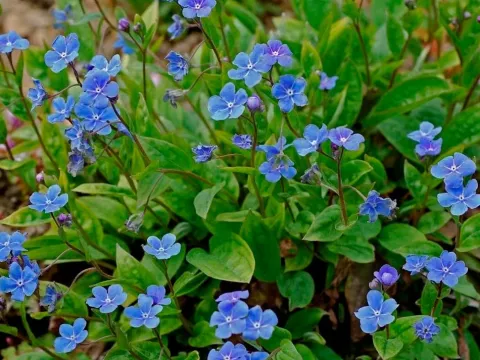
Navelwort
Omphalodes hybrids
Navelwort seeds are typically sown in the open ground during the autumn season or early spring as soon as the soil temperatures begin to rise to 5-8 degrees Celsius.
What the section contains
Navelwort
For early propagation, seeds can be started in trays indoors in March, requiring a period of stratification to break dormancy and ensure high germination rates.
The planting depth should be approximately 1-2 centimeters, as the seeds require slight darkness and stable soil moisture to sprout effectively during the growing phase.
During the spring sowing period, it is crucial to maintain consistent moisture levels, preventing the substrate from drying out while ensuring it remains well-drained to avoid decay.
The ideal planting distance is 20 by 30 centimeters, which allows the perennial plants to establish a healthy root system and form dense mats over the garden surface.
As a member of the Boraginaceae family, Navelwort prefers shaded or semi-shaded areas, as direct sun exposure during mid-summer can scorch the delicate foliage.
The plant thrives in loamy or sandy soil types that are rich in organic matter and maintain a neutral or slightly acidic pH balance for optimal nutrient uptake.
Navelwort demonstrates excellent hardiness and can survive cold winter climates, requiring no special protection beyond a natural layer of leaf litter or snow cover.
During the peak growing season, the plant requires regular irrigation, especially if periods of drought occur, to keep the foliage vibrant and encourage vigorous flowering.
Mulching the surrounding area is recommended to preserve soil moisture, suppress opportunistic weeds, and stabilize the temperature around the plant's shallow root system.
The agricultural use of Navelwort is primarily focused on its ornamental value, as it serves as an excellent ground cover plant for landscaping and erosion control.
Its ability to form a dense foliage mat makes it highly effective for suppressing invasive weeds in parks and residential garden settings throughout the spring season.
The flowering cycle, which produces delicate blossoms resembling forget-me-nots, provides significant aesthetic value and enhances the biodiversity of the local ecosystem.
By attracting pollinators such as bees and hoverflies, Navelwort provides an essential ecological service, contributing to the overall health and yield of nearby fruit-bearing crops.
Once the growing season concludes, the plant's biomass can be incorporated back into the soil as organic matter, improving the tilth and fertility of the garden plot.
The primary threats to Navelwort are fungal pathogens that flourish in environments with poor air circulation and excessive soil moisture levels during rainy periods.
Powdery mildew represents a common challenge, manifesting as a white, powdery coating on the leaves which can lead to wilting and reduced plant vigor if left untreated.
Slugs and snails are the most common pests, frequently grazing on the tender young leaves and flowers, which may lead to significant cosmetic damage to the plant beds.
To mitigate these risks, it is essential to promote good air flow by avoiding overcrowding and implementing cultural practices such as early morning irrigation to keep foliage dry.
- Use of organic fungicides when symptoms appear.
- Manual removal of snails and slugs in the evening.
- Proper drainage to prevent waterlogging of the roots.