
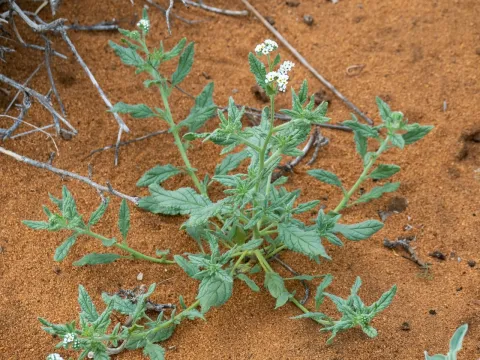
Heliotropium bacciferum
Heliotropium bacciferum
Heliotropium bacciferum is a perennial plant species belonging to the Boraginaceae family. It is native to arid and hyper-arid regions, commonly found in the deserts of North Africa and the Arabian Peninsula.
What the section contains
Heliotropium bacciferum
This crop is highly adapted to extreme environmental conditions, characterized by high temperatures and minimal water availability. It thrives in well-drained, sandy, or rocky soils that have very little organic matter.
Botanically, the plant exhibits xerophytic features such as dense pubescence on the foliage, which serves to reduce water loss through transpiration. Its root system is deep and expansive, allowing it to tap into moisture stored deep within the soil profile.
For cultivation, it requires full sun exposure and a careful watering schedule. Inappropriate irrigation, specifically excessive watering, is the most common cause of failure in cultivating this species, as it is highly susceptible to root rot.
The plant has been used historically in local medicinal practices and serves as an important component in the stabilization of arid soils and sand dunes within its natural range.
The primary threats to Heliotropium bacciferum include various fungal pathogens that flourish in damp, poorly ventilated soil conditions. Managing soil moisture is the most effective preventative strategy.
Insects like aphids and spider mites can infest the plant, particularly if the crop is stressed by suboptimal climatic conditions or crowded planting density. Regular monitoring is necessary to prevent widespread damage.
The presence of specific alkaloids in the plant tissue acts as a natural defense mechanism against many common herbivores; however, specialized pests can still cause localized damage if the crop is not well-managed.
Agricultural practices to combat these threats include promoting good airflow, avoiding overhead irrigation, and maintaining healthy soil microbial balance to ensure the plant's resilience.
Cultivators should prioritize preventative sanitary measures, such as selecting clean sites for planting and removing any symptomatic plants immediately to prevent the spread of soil-borne diseases.