
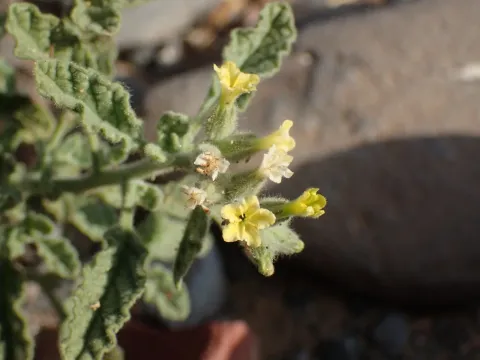
Heliotropium arbainense
Heliotropium arbainense
Heliotropium arbainense is a herbaceous plant species within the Boraginaceae family, natively adapted to arid and semi-arid environments. In the wild, seed germination is triggered by seasonal precipitation, allowing the plant to thrive when moisture levels are sufficient for initial development.
What the section contains
Heliotropium arbainense
In a cultivation setting, sowing is best performed in the spring once the soil temperature is stable and the risk of frost has passed. Seeds often possess dormancy mechanisms, requiring either stratification or chemical priming to ensure uniform germination rates across the field.
Optimal sowing depth is shallow, generally between 1 and 2 centimeters, to allow the small seeds to emerge without excessive energy expenditure. Because the plant naturally inhabits loose soils, the seedbed must be prepared to be friable and well-aerated to support seedling vigor.
Proper spacing is crucial as mature plants can spread significantly, competing for sunlight and soil nutrients. Establishing an optimal plant density ensures each individual has enough room to develop a robust root system capable of tapping into subsurface moisture.
The timing of sowing must align with the end of the winter dormancy period. Given the plant's light requirements, selecting an open field location free from canopy shade is a primary factor in successful seedling establishment and rapid growth.
Heliotropium arbainense is an exceptional xerophyte, designed by nature to withstand extreme heat and prolonged droughts. Its morphological adaptations allow it to maintain metabolic activity in conditions where other agricultural crops would fail.
Regarding soil preferences, the plant excels in sandy or loamy soils with high drainage capacity. It exhibits remarkable tolerance to saline conditions, making it an excellent candidate for agricultural diversification in regions burdened with soil salinity issues.
Sunlight is the most critical environmental factor for this species; it requires full-day solar radiation for optimal photosynthetic performance. Shade or cloudy conditions consistently result in stunted growth and a reduction in the plant's phytochemical concentration.
While the plant is drought-resistant, managed irrigation, particularly during the early vegetative phases, can significantly improve overall biomass yield. Drip irrigation systems are the most efficient method to provide moisture without causing the waterlogging that leads to root system failure.
Fertilization regimes for this crop should be cautious and balanced. Excessive nitrogen supply must be avoided, as it encourages excessive foliage growth at the expense of root development and drought-hardiness, potentially making the plants more susceptible to environmental stress.
The primary threat to the health of Heliotropium arbainense is fungal-induced root rot, typically triggered by improper irrigation management or poor soil drainage. When the root zone remains waterlogged, these pathogens can quickly compromise the plant's structural integrity.
Pests such as aphids and spider mites are frequent invaders, especially in dry environments where the plant is stressed. Early intervention with bio-rational pest control measures is recommended to maintain the quality of the aerial parts and prevent secondary infections.
Soil-borne nematodes can also pose a risk, as they create lesions on the root system, providing entry points for other pathogens. Maintaining clean fields and strictly adhering to crop rotation patterns is essential to reduce the concentration of these pests in the soil.
Viral infections, often spread by insect vectors, can occur during the active growth phase. Removing symptomatic plants immediately upon detection is a vital phytosanitary practice to prevent the rapid spread of viral agents throughout the entire plantation.
During periods of high humidity, the development of powdery mildew may affect the photosynthetic surface area. Ensuring proper plant spacing to facilitate airflow and keeping the field free of weeds are the most effective non-chemical ways to mitigate disease risks.
The harvest phase is targeted during the peak flowering stage or early fruiting, as this is when the concentration of the plant's secondary metabolites is typically highest. Precise timing is necessary to capture the peak agricultural value of the crop.
Mechanized harvesting should involve cutting the biomass at an appropriate height, usually several centimeters above the soil level. The equipment must be adjusted to minimize shattering of the leaves, which are prone to dropping as the plant begins to lose moisture.
Post-harvest management involves rapid drying in shaded, ventilated areas. Excessive heat exposure must be avoided to prevent the volatilization of essential oils, which are key commercial components of this crop.
Storage of the finished dried product requires low-humidity environments and protection from light to maintain phytochemical stability. High moisture levels during storage can lead to the growth of mold, effectively rendering the harvested biomass unsuitable for commercial use.
Final industrial applications for the harvested material range from pharmacological research to specific animal feed additives. Handling during the harvesting and processing phases should be done with care, recognizing the presence of specific alkaloids within the plant tissues.