
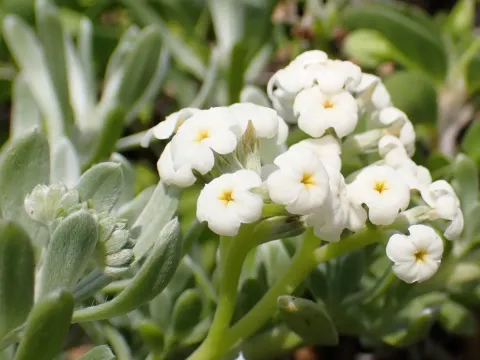
Heliotropium anomalum
Heliotropium anomalum
Heliotropium anomalum is a perennial plant species belonging to the Boraginaceae family. It is native to the Pacific islands and is predominantly found in coastal habitats such as sandy dunes and limestone-based soils, showcasing high salt tolerance.
What the section contains
Heliotropium anomalum
The plant thrives in full sun and requires high solar radiation levels to maintain its compact growth habit. It is highly sensitive to cold and requires a frost-free environment to survive, making it suitable mainly for tropical or controlled indoor cultivation.
Soil requirements are strict regarding drainage. As a plant naturally evolved on porous substrates, it demands a sandy or gravelly medium. Waterlogged soils lead to immediate decline of the root system and plant mortality.
Climate conditions should be stable with moderate humidity. While it is adapted to sea breezes, it does not tolerate stagnant air or high humidity levels that do not allow the foliage to dry out, as this can encourage fungal infections.
Botanically, it is recognized for its dense, silvery-grey foliage covered in fine hairs. These hairs serve as a protective layer against desiccation and reflect excessive heat, which is essential for survival in its arid, coastal native environment.
The most significant threats to Heliotropium anomalum include spider mites, which thrive in the warm, dry conditions preferred by the plant. These pests feed on sap, causing discoloration and eventual drop of leaves if left unchecked.
Root rot is the most common disease associated with improper irrigation practices. Maintaining a strict dry-down cycle between waterings is necessary to ensure the health of the root zone and prevent pathogenic outbreaks.
Whiteflies can also cause damage, especially in greenhouse environments where limited airflow promotes insect proliferation. Integrated pest management, including yellow sticky traps and horticultural oils, is recommended for control.
Powdery mildew may develop if the canopy becomes too dense and airflow is restricted. Pruning and regular thinning of the plant help maintain a dry microclimate around the foliage, preventing spore germination.
Overall, monitoring for nutritional deficiencies or imbalances is important, as stunted growth can make the plant more susceptible to opportunistic pathogens. A balanced, low-concentration fertilizer regime is usually preferred.