
Hackelia
Hackelia
Hackelia is a genus of flowering plants belonging to the Boraginaceae family. Commonly known as stickseeds, these plants are native to North America, flourishing in varied habitats ranging from mountain forests to open scrublands, demonstrating significant adaptability to different soil types.
What the section contains


Hackelia
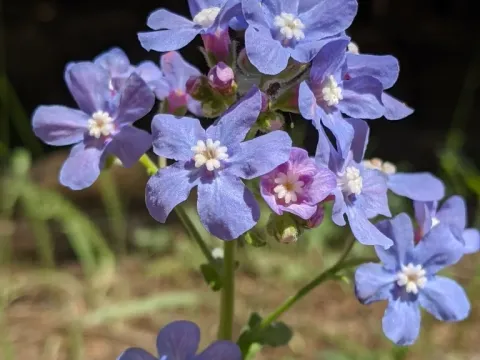
Botanically, plants in this genus are recognized by their rough, hairy foliage and small, often blue or white flowers arranged in coiled cymes. They are typically biennials or perennials, developing a sturdy taproot system that supports their survival in challenging environmental conditions, including rocky slopes.
Regarding cultivation requirements, Hackelia thrives in well-drained, porous soils. It is essential to avoid sites prone to waterlogging, as the root system is susceptible to decay in heavy, compacted clays. Providing proper drainage is the most critical factor for successful growth in a managed landscape.
The plant demonstrates high tolerance to climatic extremes, particularly cold winters, which is reflective of its native range in higher elevations and latitudes. During the growing season, consistent moisture is beneficial, but the plant is notably drought-tolerant once it has become well-established in the soil.
In terms of usage, Hackelia is primarily valued in native plant gardening and ecological restoration projects. By providing a natural source of nectar for local pollinators, it serves a functional role in supporting biodiversity, making it an excellent candidate for meadow-style landscapes and conservation plantings.