
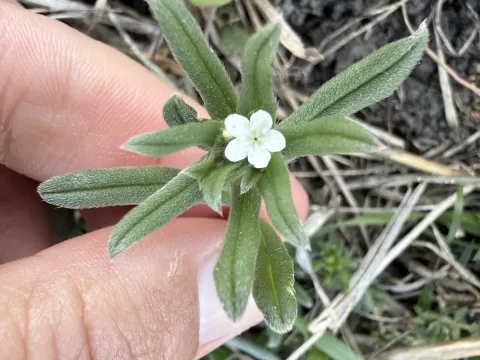
Gromwell
Buglossoides Moench
Gromwell (genus Buglossoides) is an interesting crop belonging to the Boraginaceae family. Successful establishment of this plant requires attention to timing, typically involving sowing in early spring when the soil starts to warm up.
What the section contains

Gromwell
In regions with milder climates, farmers may opt for autumn sowing to capitalize on winter moisture, though this depends on the specific hardiness of the variety being grown.
The planting depth should be shallow, usually between 1 and 2 centimeters, as the seeds require precise moisture contact to germinate successfully without being buried too deep.
Uniform spacing is achieved using high-precision drills, which ensure that the population density is optimal for the plant's development and resource utilization.
Field preparation must focus on creating a fine, weed-free tilth, which is essential for the germination of small seeds and the vigorous early growth of the young seedlings.
Gromwell thrives in locations that receive full sunlight, as it is a light-demanding crop that requires solar energy to maximize its reproductive output.
The ideal soil for this crop is a well-drained loam or sandy loam with a neutral to slightly alkaline pH, which prevents waterlogging and root rot issues.
Although the plant exhibits decent drought tolerance once established, consistent soil moisture during the active growth phase significantly improves overall productivity.
Proper aeration is vital for the health of the root system; therefore, avoiding soil compaction is a key component of managing the cultivation area effectively.
Integrated soil fertility management, involving a balanced supply of macro and micro-nutrients, helps the plant maintain steady growth throughout the season.
Crop yields of Gromwell are largely determined by the success of the establishment phase and the ability of the crop to outcompete weeds during early development.
Harvesting the seed provides a valuable raw material, particularly known for its specific fatty acid composition, which is highly sought after by the cosmetic industry.
Beyond oil production, the plant has historical significance in the textile and pharmaceutical industries, offering potential for value-added product development.
Yield estimation is conducted by analyzing seed set frequency and the development of lateral branches, which serve as indicators of the plant's final reproductive potential.
By implementing scientific crop rotation and pest management strategies, farmers can achieve consistent, high-quality yields that meet modern market standards.
Fungal diseases, especially those thriving in humid environments, pose the most significant risk to Gromwell if the planting density is too high or air circulation is poor.
Pest management should focus on early detection of foliage-feeding insects, which can weaken the plants and make them more susceptible to secondary infections.
Weed control is perhaps the most critical task during the first month, as Gromwell seedlings grow slowly and are easily suppressed by aggressive annual weeds.
Maintaining a clean buffer zone around the crop and ensuring a proper rotation cycle prevents the buildup of soil-borne pathogens common to the Boraginaceae family.
- Early-season weeding to minimize competition.
- Monitoring for aphid infestations during the floral stage.
- Removal of debris after harvest to reduce overwintering sites for pests.
Harvesting takes place once the seeds have reached full maturity, marked by a color shift and the hardening of the seed coat, indicating optimal oil content.
Direct combining is the preferred method for large-scale operations, requiring careful adjustment of the cylinder speed to avoid mechanical damage to the seeds.
Post-harvest cleaning is essential to remove chaff, dust, and any remaining organic matter that could affect the quality and storability of the seed lot.
Drying the harvested seeds to a stable moisture percentage is necessary to prevent spoilage and ensure that the seeds remain viable for extraction or future planting.
Storage should occur in cool, dry conditions with adequate ventilation to protect the seeds from moisture absorption and potential infestation by storage pests.