
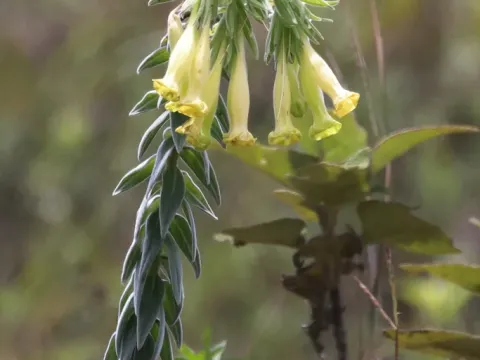
Gromwell
Lithospermum
Sowing Gromwell is recommended in late autumn or early spring after the seeds have undergone a cold stratification process. The seedlings exhibit a slow growth rate during the initial vegetation phase, making it essential to keep the fields free of weeds.
What the section contains


Gromwell
For successful germination, seeds should be as fresh as possible, as they tend to lose viability if stored for long periods in suboptimal conditions. The seeds should be planted at a shallow depth of approximately 1 to 2 centimeters.
The crop thrives best with spaced planting and wide rows, which simplifies field maintenance and mechanical operations. Optimal plant density depends on whether the crop is being grown for herbal raw materials or for seed production.
Maintaining moderate soil moisture during the germination period is critical to prevent the formation of a dense soil crust. If necessary, covering the rows with agrotextile can create an ideal microclimate for the young plants.
When sowing in spring, soil preparation should be completed during the preceding autumn with the incorporation of organic fertilizers. Soil temperature must reach at least 10–12 degrees Celsius to ensure uniform and reliable emergence.
Gromwell belongs to the Boraginaceae family and is a perennial herbaceous plant featuring a deep and robust root system. In its natural habitat, it typically grows on dry, rocky slopes, steppe environments, and forest edges across Europe and Asia.
This crop is highly light-demanding and prefers open, sun-exposed locations. Insufficient light exposure often leads to spindly stalks and a marked decrease in the concentration of bioactive compounds within the plant tissues.
Soil requirements focus on the necessity of excellent drainage, as waterlogging is detrimental to the plant's health. Gromwell performs best in light, sandy, or loamy soils with a neutral or slightly alkaline pH level.
Gromwell is noted for its high drought tolerance; however, irrigation during the active growth and flowering stages can significantly increase total biomass yield. While it can adapt to nutrient-poor soils, it shows a positive response to potassium and phosphorus fertilization.
The crop is highly cold-hardy, allowing it to be grown in various temperate climate zones. It does not require winter protection and successfully survives significant sub-zero temperatures beneath a stable snow cover.
The economic use of Gromwell primarily includes its role as a medicinal plant and a natural dye source. The roots of certain species contain naphthoquinone pigments, such as shikonin, which are utilized in both the textile and food industries.
The aerial parts of the plant are utilized in traditional and modern medicine due to their antiseptic and anti-inflammatory properties. The biological quality of the harvested material depends heavily on the timing of the harvest and the drying conditions.
When grown commercially, yield is measured by the weight of dried roots or biomass per hectare. A high-quality root harvest is typically attainable by the second or third year following the initial sowing.
Economic efficiency increases when field management focuses on maximizing root system development. In the first year, removing flower stalks may help redistribute energy reserves towards root growth and thickening.
Strict adherence to post-harvest processing standards is essential for maintaining product quality. Rapid drying at controlled temperatures preserves the valuable compounds and prevents the degradation of the raw plant material.
Gromwell is generally resistant to most common agricultural pests due to its specific secondary metabolite profile. However, young seedlings may be susceptible to leaf-eating insects and slugs during periods of high humidity.
Among the diseases, fungal infections resulting from poor ventilation or waterlogged soil are the most common threats. Root rot can lead to plant loss if irrigation and drainage protocols are not strictly followed.
Disease prevention relies primarily on practicing crop rotation and avoiding overly dense plantings. Chemical fungicides are rarely needed and should be reserved only for cases of severe pathogenic infection.
Weed management is a critical task, as Gromwell grows slowly in its early stages and cannot effectively compete with aggressive weeds. Manual weeding in rows or the use of selective herbicides is recommended to keep the field clear.
Pests like aphids or spider mites may appear during dry spells. Where possible, preference should be given to biological control methods to maintain the organic integrity of the medicinal raw materials.
Harvesting Gromwell requires careful attention to detail. The root mass should be dug up in the autumn as the aerial parts begin to wither, as this is when the roots contain the highest concentration of active compounds.
For seed production, the tops of the shoots should be harvested during the full ripeness phase. It is essential to perform the harvest during dry weather to minimize the risk of mold growth on the seed material.
Mechanical harvesting is often difficult due to the depth of the roots and the fragility of the stalks. Many growers utilize manual labor or specialized root-lifting machinery to carefully extract the harvest from the soil.
After excavation, the roots must be cleaned of soil, washed, and dried in well-ventilated areas or specialized ovens at temperatures between 40 and 50 degrees Celsius. The finished material should be stored in paper or fabric bags.
Strategic harvest timing ensures a premium product that meets pharmacopeia standards and the specific quality requirements of industrial processors.