
Dioscorides houndstongue
Cynoglossum dioscoridis
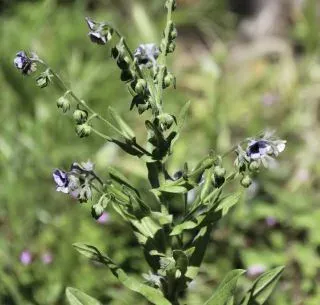
Description
Sowing dates
Dioscorides houndstongue is a member of the Boraginaceae family. The most effective sowing time is late autumn, allowing the seeds to undergo natural winter stratification, which enhances germination rates in early spring.
Spring sowing is also possible provided the soil temperature reaches at least 6–8 degrees Celsius. Seeds should be placed at a depth of 2–3 centimeters to ensure optimal soil moisture contact.
Proper spacing is crucial for healthy development. It is recommended to maintain row spacing of approximately 50 centimeters, which provides sufficient space for the root system to expand.
The seeds have a characteristic hooked surface, so precise calibration of sowing equipment is necessary to ensure an even distribution across the field and prevent overcrowding.
Seedlings typically appear within 2–3 weeks. Early weeding and thinning are essential during the initial growth stage to reduce competition and improve overall plant vigor.
Growing requirements
This crop thrives in open, sunny environments. It is highly valued for its drought tolerance, making it a reliable option for regions where water resources might be limited.
The ideal soil conditions include light, well-drained loamy or sandy substrates. Heavy or waterlogged soils are detrimental to the plant as they significantly increase the risk of rot.
The optimal pH range is between 6.5 and 7.5. The plant is sensitive to excessive salinity and high groundwater levels, which should be taken into account when choosing a site.
Balanced fertilization with phosphorus and potassium is recommended during the active growth period. Excessive nitrogen should be avoided to prevent over-development of foliage at the expense of root quality.
The plant is frost-hardy and can withstand significant temperature drops during winter, making it well-suited for cultivation in temperate climates with cold winters.
Main diseases and pests
Fungal diseases affecting the root system, such as root rot, are the primary concern for this crop, especially in conditions of poor drainage or high humidity.
Insect pests including weevils and cutworms can cause significant damage to young plants. Monitoring the field regularly is necessary to prevent extensive damage to the crops.
A structured crop rotation plan is essential. The plant should not be returned to the same plot for at least three to four years to avoid the accumulation of soil-borne pathogens.
Weed control is critical, as many common weeds can serve as hosts for various pests and diseases that threaten the development of Dioscorides houndstongue.
Implementing seed treatment with biological fungicides provides an effective initial defense against common pathogens, ensuring better stand uniformity and plant survival.
Harvesting
The harvest of the roots is typically scheduled for the second year of growth. At this stage, the roots have attained sufficient size and optimal concentration of compounds.
Harvesting is performed in late autumn, following the senescence of the above-ground parts of the plant. Using mechanical lifters is the most efficient way to extract the roots.
Once harvested, the roots must be promptly cleaned of soil and debris, followed by washing. Any damaged or unhealthy roots should be sorted out and discarded.
Drying should be conducted in shaded, well-ventilated areas. Controlled drying temperatures below 45 degrees Celsius are necessary to preserve the integrity of the chemical components.
Finished raw material should be stored in dry, cool, and dark conditions. Proper packaging is essential to prevent moisture absorption and maintain the quality of the harvest.