
Common comfrey
Symphytum officinale
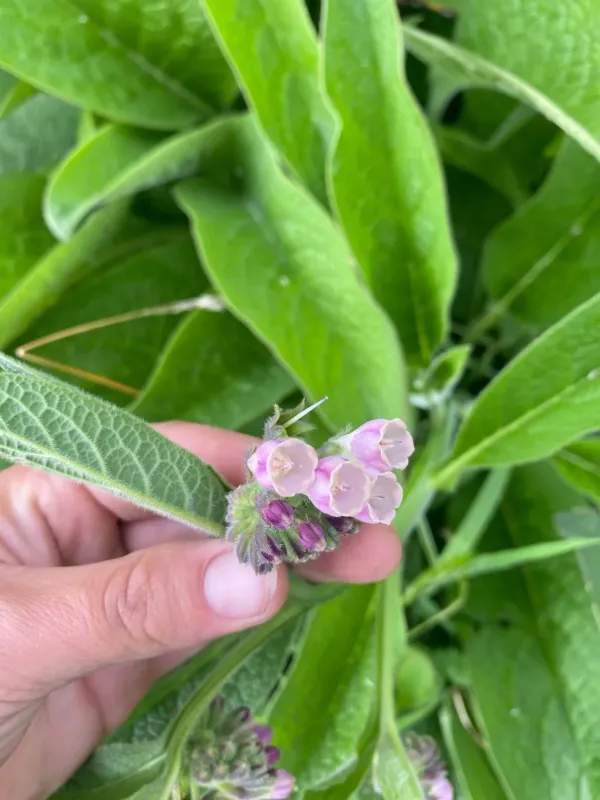
Description
Sowing dates
Common comfrey, or Symphytum officinale, is a hardy perennial belonging to the Boraginaceae family. It is typically propagated through root cuttings, which ensures genetic consistency and rapid establishment.
While comfrey can be grown from seeds, the process is slower and less reliable. Root cuttings about 10–15 centimeters long are the preferred method for establishing commercial or garden stands.
Planting is best performed in early spring or autumn. Cuttings should be placed horizontally in furrows, covered with approximately 10 centimeters of soil to encourage vigorous sprouting.
The plant is highly invasive in terms of root expansion and can easily take over a site. Careful selection of the planting area is essential to prevent uncontrolled spread.
Once established, a comfrey stand can remain productive for well over a decade, making it a permanent fixture in many sustainable farming systems.
Growing requirements
Comfrey thrives in deep, fertile, and moisture-retentive soils. It excels in heavy loams and is highly responsive to organic matter and manure applications.
The plant is remarkably winter-hardy, surviving freezing temperatures easily. However, it requires well-drained soil; stagnant winter water can lead to root decay.
Although it tolerates partial shade, comfrey achieves its maximum biomass production in full sun, provided it has consistent access to moisture during the growing season.
The plant is famous for its "dynamic accumulator" properties, mining minerals from the deep subsoil with its powerful taproot system, which improves soil fertility.
Regular maintenance involves keeping the area free of vigorous perennial weeds during the first two years until the comfrey canopy is dense enough to suppress competitors.
Yield
Comfrey is renowned for its exceptional biomass yield. Under optimal conditions, a well-managed stand can be cut three to four times within a single growing season.
Green matter yields can exceed 60–80 tonnes per hectare annually. This high production makes it a premier crop for liquid fertilizer production and mulch.
Root yields, if the crop is grown for medicinal herbal trade, are typically harvested after three years, producing significant quantities of harvestable rhizomes.
The nutrient profile of comfrey leaves, particularly their high potassium content, makes them an invaluable input for organic crop nutrition programs.
Consistent harvesting encourages secondary growth, and yields remain stable for years provided the plant is adequately nourished with compost or nitrogen-rich fertilizers.
Main diseases and pests
Common comfrey is remarkably resistant to pests and diseases. Major fungal pathogens rarely cause significant damage unless the crop is subjected to extreme waterlogging.
Root rot is the primary threat, typically arising from poor soil drainage. Ensuring that the planting site has adequate slope or permeability is the best preventative measure.
Slugs and snails may occasionally feed on young spring growth, but the plant's rapid growth rate usually allows it to recover without any intervention.
The plant effectively outcompetes most weeds, which reduces the need for herbicides and makes it an ideal candidate for organic and regenerative agricultural systems.
Due to its high level of natural resilience, comfrey requires very little chemical input, aligning perfectly with sustainable and ecologically focused farming practices.
Harvesting
The harvesting of green foliage should occur just as the plant begins to flower. This stage coincides with the peak concentration of essential minerals in the leaves.
Mowing should be done approximately 5–7 centimeters above the soil line to protect the crown and ensure rapid regrowth for subsequent cuts during the season.
Root harvesting is performed in the late autumn after the foliage has died back, ensuring the roots have stored maximum nutrients for the dormant period.
Because the foliage contains high moisture levels, it must be handled correctly. It can be used fresh for mulch or dried carefully to prevent molding during storage.
Post-harvest irrigation is highly recommended to stimulate the next flush of growth, especially if the harvest occurs during dry spells in the middle of summer.