
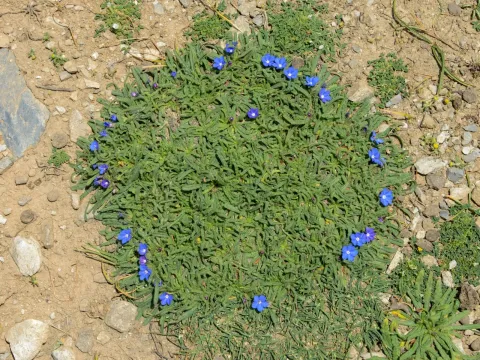
Anchusa cespitosa
Anchusa cespitosa
Anchusa cespitosa is a distinctive low-growing perennial species belonging to the Boraginaceae family. This rare plant is native to the high-altitude rocky slopes of Crete, where it has evolved to thrive in harsh, exposed conditions.
What the section contains
Anchusa cespitosa
Botanically, it is recognized for its dense, mat-forming rosettes of hairy foliage, which provide excellent insulation and protection. During the flowering season, the plant produces vibrant blue, trumpet-shaped flowers that bloom on very short stalks, barely rising above the leaf mound.
In cultivation, this plant demands full sun exposure to maintain its compact growth habit. Providing it with anything less than direct, intense sunlight results in etiolated growth and a significant reduction in flower production.
Soil requirements are strict: the substrate must be exceptionally well-draining, ideally a rocky or sandy mix with an alkaline to neutral pH. It is essential to avoid rich, organic-heavy soils that would compromise the plant's natural structure.
Given its mountain origin, Anchusa cespitosa prefers cool, dry growing conditions. It is remarkably resilient to cold but remains highly susceptible to moisture-induced rot during wet winters or humid summers, necessitating careful site selection.
The primary threats to Anchusa cespitosa are soil-borne pathogens, specifically root rots, triggered by stagnant moisture. Ensuring a perfectly porous soil structure is the most critical step in preventing the decline of the plant's root system.
Common garden pests such as aphids may infest the tender tissues during the initial spring growth phase. Monitoring and early intervention with insecticidal soaps or systemic treatments help maintain plant vigor.
Gastropods, including slugs and snails, can cause significant damage to the succulent leaves, particularly in damp environments. Utilizing sharp grit or gravel mulch around the crown of the plant often acts as a deterrent for these pests.
Powdery mildew can become an issue if there is insufficient airflow around the rosettes. Proper spacing and placement in an open, airy location in the rock garden effectively mitigate the risk of fungal outbreaks.
Improper fertilization can weaken the plant's natural defenses, leading to increased susceptibility to disease. It is highly recommended to avoid high-nitrogen fertilizers that encourage lush, succulent growth that is prone to physiological collapse.