
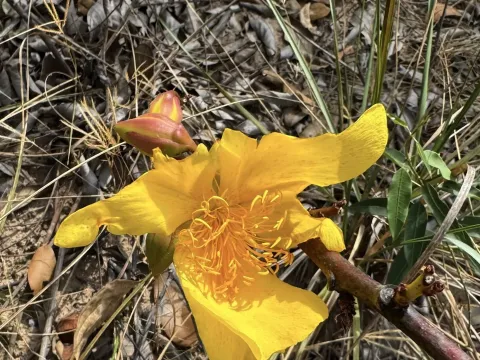
Cochlospermum regium
Cochlospermum regium
Cochlospermum regium, a member of the Bixaceae family, is a perennial plant known for its significant medicinal properties. It is native to the Cerrado region in Brazil, characterized by distinct wet and dry seasons.
What the section contains
Cochlospermum regium
The plant exhibits a xylopodium, a specialized woody underground organ, which acts as a storage reservoir for water and carbohydrates, allowing the plant to survive harsh drought conditions.
For cultivation, well-draining, nutrient-poor, acidic soils are required. High levels of soil organic matter can sometimes cause issues; hence, sandy textures are preferred to mimic the natural savanna habitat.
The crop thrives in full sun exposure. It is highly heat-tolerant and requires specific temperature fluctuations to trigger healthy growth cycles throughout the year.
Agricultural management should focus on maintaining optimal soil aeration. Compacted soils prevent the proper development of the xylopodium, leading to reduced yield and lower quality of the raw material.
The economic value of Cochlospermum regium lies in its roots, which are harvested to extract various phytochemicals, including flavonoids and essential oils used in medicinal products.
Harvesting usually occurs at the end of the dry season, just before the first rains, which ensures that the concentrations of active chemical compounds are at their seasonal peak.
The extraction process involves removing the entire plant or pruning the roots, depending on the agricultural model used. Care is taken to ensure that the xylopodium remains intact during digging.
Post-harvest processing requires immediate washing to remove soil residues, followed by slicing the root into smaller pieces to facilitate efficient moisture removal during drying.
Final product quality depends on the speed of dehydration. Slow drying at moderate temperatures preserves the integrity of the bioactive compounds, preventing degradation before processing into extracts.