
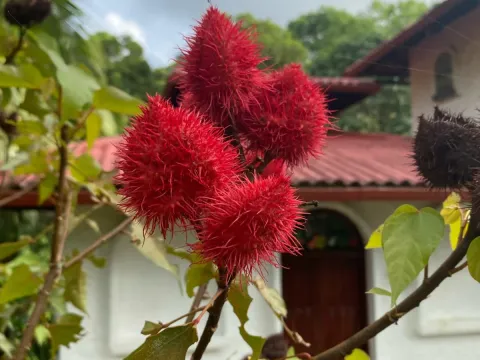
Bixa orellana
Bixa
Bixa orellana, commonly referred to as the lipstick tree, is an evergreen shrub or small tree belonging to the Bixaceae family, native to tropical regions of the Americas.
What the section contains

Bixa orellana
Propagation is typically done through seeds or vegetative cuttings; seeds should be pre-treated by soaking in warm water for 24 hours to improve germination rates.
Sowing should take place in well-draining, nutrient-rich soil with a slightly acidic to neutral pH, ensuring that the bed remains consistently moist but not waterlogged.
Seedlings are usually started in nurseries under partial shade before being transplanted into their permanent field locations after reaching a sufficient height.
Planting density depends on the local environment, but a standard spacing of 3 to 5 meters is recommended to allow adequate airflow and light penetration for the canopy.
This crop thrives in tropical climates, requiring consistent temperatures ranging between 20°C and 30°C and a frost-free environment to survive and develop properly.
It prefers full sun exposure to maximize flowering and pod production, as shade can significantly reduce the concentration of bixin in the seeds.
While the tree is relatively tolerant to various soil types, it performs best in deep, fertile soils that offer excellent drainage to prevent root diseases.
Moderate to high rainfall is beneficial, though the plants exhibit some drought tolerance once they have established a deep and robust root system.
Protection from strong winds is vital for this species, as the brittle branches and large leaves can be easily damaged, leading to reduced yield and structural issues.
The economic value of Bixa orellana is derived primarily from the seeds, which are covered in a fleshy red pulp used to produce the natural food colorant, annatto.
Commercial harvesting typically begins when the trees are 3 to 5 years old, with production steadily increasing as the tree reaches its peak maturity.
An average mature tree can yield several kilograms of seeds annually, though this figure fluctuates based on weather conditions and agricultural management techniques.
Harvesting requires careful timing to ensure the seeds have reached maximum pigment content before the pods become overly dry and prone to shattering.
The extracted annatto is highly valued in both the food industry and cosmetic sectors for its vibrant color, safety profile, and antioxidant properties.
Pests such as aphids, scale insects, and various caterpillars are common threats that can defoliate the tree or weaken its overall structure if not monitored.
Fungal pathogens, especially those causing root rot or leaf spot, can become problematic in areas with high humidity and insufficient air circulation in the orchard.
Preventative measures include regular pruning of the canopy to improve air circulation and sunlight access, which discourages the development of moisture-loving fungi.
Integrated pest management, including the use of beneficial insects and selective organic pesticides, is preferred to maintain the quality of the harvested seeds.
Proper field sanitation, such as removing fallen leaves and infected pods, plays a crucial role in reducing the inoculum of common tropical plant diseases.
Harvesting involves manual picking of the capsules once they change color from green to dark red or brownish, indicating that they are ready for processing.
It is important to harvest sequentially as pods on the same tree often mature at different rates over several weeks, depending on the flowering pattern.
Once gathered, the capsules should be spread out to dry in the sun, allowing the pods to crack open naturally and release the coated seeds.
Threshing is performed to separate the seeds from the pod debris, ensuring that the valuable red waxy coating remains intact during the process.
The final product must be stored in cool, dry conditions and airtight containers to prevent degradation of the bixin pigment and maintain market-grade quality.