
Cochlospermum tinctorium
Cochlospermum tinctorium
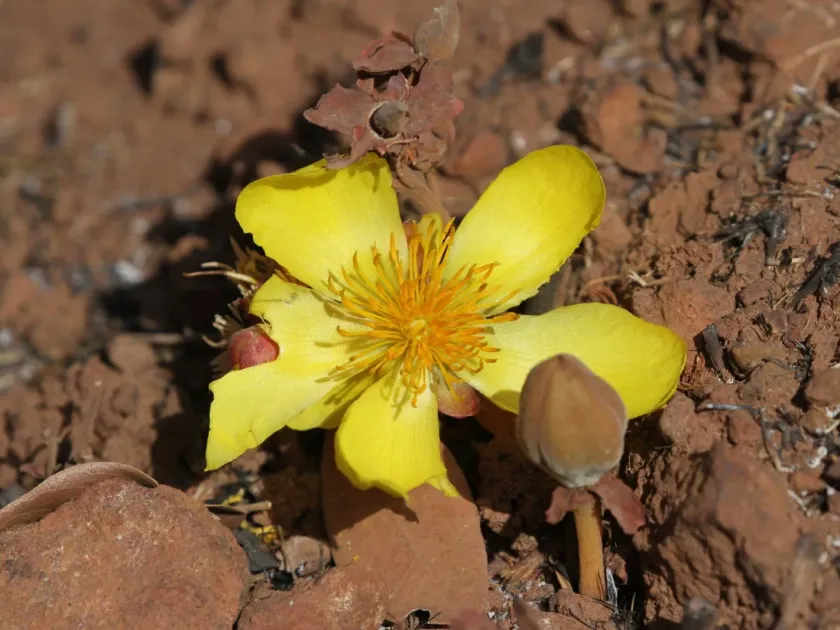
Description
Sowing dates
Seeds of Cochlospermum tinctorium require scarification to break their hard seed coat and ensure uniform germination. Sowing is typically carried out at the beginning of the rainy season to provide consistent moisture for initial development.
As this species is a perennial shrub, proper spacing is crucial to reduce competition for nutrients and water. Planting in prepared rows helps optimize the use of soil space and eases future maintenance.
For nursery production, a sandy and well-draining substrate is ideal. The germination temperature should remain consistently between 25 and 28 degrees Celsius to support healthy sprout development.
In natural habitats, propagation often happens through self-seeding; however, in controlled agricultural settings, mechanized or manual sowing in precise grids is preferred for better management.
The cultivation site must have full sun exposure, as the plant is highly photophilic and will suffer from stunted growth or increased vulnerability to diseases if subjected to shade or overcrowding.
Growing requirements
Cochlospermum tinctorium is a member of the Bixaceae family, known for its resilience as a xerophytic subshrub. It is naturally adapted to the savanna climates of West Africa, surviving prolonged drought.
The crop thrives in loose, sandy, or loamy soils with excellent drainage. Heavy clay soils that tend to retain water are detrimental, as they pose a high risk of root rot and overall failure.
The plant possesses a robust, fleshy root system that acts as a storage organ for water and nutrients. This physiological trait is why the plant is highly valued for its medicinal and dye properties.
Strictly tropical, the plant requires high temperatures to thrive and cannot tolerate frost. Its growth cycle is synchronized with the warmth and moisture availability of its native savanna environment.
Optimal growth depends on high light intensity. Any limitation in solar radiation leads to poor root development, reducing both the biomass and the concentration of active chemical compounds.
Yield
The yield of this crop is primarily measured by the total mass of the harvested roots. In a plantation setting, the roots typically reach maturity and commercial viability after 3 to 4 years.
Peak accumulation of bioactive substances occurs during the dormant phase of the plant cycle. This timing is critical for ensuring the high quality and potency of the harvested raw material.
Agricultural practices, such as consistent weeding and aeration of the soil through mechanical loosening, significantly improve root volume and biomass accumulation per hectare.
Harvesting is usually a labor-intensive manual task. Careful extraction is necessary to prevent breaking the roots, as damage can lead to loss of material during processing or degradation.
Consistent, long-term yields can be achieved by rotating planting cycles, which prevents the exhaustion of specific soil nutrients required for the continued health of the shrubs.
Main diseases and pests
Fungal infections represent the most significant threat to Cochlospermum tinctorium, particularly in fields where soil moisture is not adequately managed, leading to root rot.
Soil-borne pests like nematodes can cause substantial damage to the developing root system. Crop rotation and the selection of healthy planting material are effective prevention strategies.
Insect pests that consume foliage can weaken the plant's overall vigor. Integrated pest management, focusing on early detection and biological control, is recommended for sustainable production.
Viral pathogens may occasionally impact growth, causing leaf deformation or stunted development. Such plants should be isolated or removed to prevent the spread of the virus across the plantation.
Poor ventilation and overcrowding increase the risk of mold growth on the stems. Maintaining clear lanes and adequate spacing is essential for plant health and hygiene.
Harvesting
Harvesting starts when the plant enters dormancy, evidenced by the senescence of the aerial parts. This is the stage when nutrient concentration in the roots is at its maximum.
Roots are excavated carefully, cleaned of excess soil, and separated from the shoots. Immediate transport to a processing site is necessary to prevent contamination or moisture loss.
After washing, the roots are often sliced to improve drying efficiency. The drying process must be carefully monitored to keep temperatures below 50 degrees Celsius to preserve chemical integrity.
Proper drying is essential to prevent degradation. Excessive heat or direct sunlight can destroy the medicinal pigments and active compounds that provide the plant with its commercial value.
Once dried to a stable moisture content (typically around 10–12%), the product must be stored in airtight containers to protect it from humidity, pests, and environmental factors.