
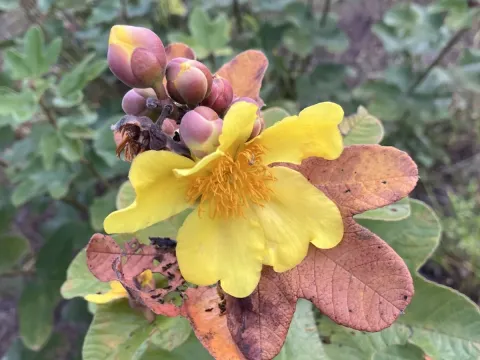
Cochlospermum planchonii
Cochlospermum planchonii
Cochlospermum planchonii is typically propagated via seeds sown at the onset of the rainy season to ensure optimal moisture levels for germination.
What the section contains
Cochlospermum planchonii
The seeds have a hard seed coat, making scarification a necessary practice to improve water uptake and significantly increase the germination rate.
Nursery propagation is often employed to raise healthy seedlings, which are then transplanted into the field once conditions are stable.
Planting density must be carefully calculated to provide enough space for the roots, which are the main economic part of the plant, to develop fully.
Deep plowing before sowing is essential to prepare a loose substrate, as the plant develops a deep taproot system requiring good soil aeration.
This member of the Bixaceae family thrives in tropical savanna climates, requiring distinct wet and dry periods for successful growth and development.
The soil should be well-drained, sandy or sandy-loam, to prevent waterlogging, which is a major limiting factor for the survival of this species.
Full sun exposure is vital; the plant is highly intolerant to shading, which significantly reduces the accumulation of secondary metabolites in the roots.
Stable temperatures between 25 and 35 degrees Celsius promote vigorous biomass production and the synthesis of essential pharmaceutical compounds.
Minimal fertilization is required, but organic compost is beneficial at the start of the season to support initial vegetative growth without causing excessive foliage over root development.
The yield of Cochlospermum planchonii is focused on the harvest of dried roots, which contain valuable phytochemicals used in traditional and modern medicine.
Optimal yields are typically achieved after 3 to 4 years of growth when the concentration of medicinal compounds reaches its biological peak.
Careful management of soil nutrients and water levels during the vegetative phase is key to maximizing the total biomass of the roots at harvest time.
Crop monitoring ensures that the harvest is timed precisely at the end of the dry season, ensuring the highest concentration of active ingredients in the roots.
Post-harvest processing, including cleaning and proper drying, is crucial to maintain the quality of the raw material for international markets.
While generally hardy, the plant is susceptible to fungal infections if soil drainage is insufficient or if humidity remains high for extended periods.
Root rot is the most serious threat, often caused by stagnant water, and can devastate an entire plantation if not detected early.
Effective crop rotation is recommended to avoid the buildup of soil-borne pathogens that thrive in established field plots over several cycles.
Mechanical injuries during cultivation provide entry points for pathogens, making it important to use careful weeding and maintenance techniques.
Proper storage is essential to protect the dried roots from pests and mold, which can quickly degrade the commercial value of the harvested produce.
The harvest period is strictly determined by the phenological stage of the plant, specifically when the aerial parts have completely withered and dried.
Roots should be extracted carefully to avoid cuts or abrasions, which can lead to oxidation and loss of essential therapeutic compounds.
Manual digging or mechanical harvesting equipment designed for taproot extraction can be used, provided they reach the necessary depth without damaging the core.
Immediate processing after extraction involves washing the roots to remove all soil residues, as impurities can affect the shelf life and quality.
Drying must be conducted in well-ventilated areas, away from direct sunlight, to ensure the chemical composition remains stable and the product is ready for processing.