
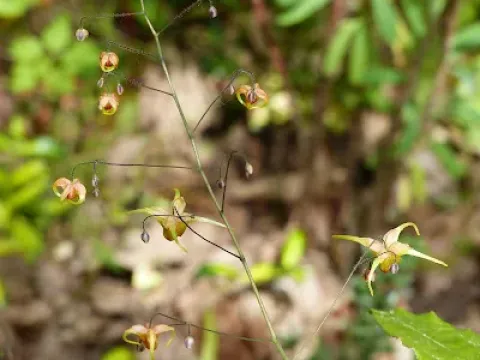
Epimedium pauciflorum
Epimedium pauciflorum
Epimedium pauciflorum is a perennial herbaceous plant belonging to the Berberidaceae family. It is naturally found in forest environments, where it has evolved to thrive in shade, making it a specialized crop for protected or semi-shaded agricultural conditions.
What the section contains
Epimedium pauciflorum
The plant features a rhizomatous root system that ensures its resilience and longevity in diverse environmental settings. Its native distribution highlights its adaptation to cool, moisture-retentive forest soils rich in organic matter and leaf litter.
To achieve optimal growth, this crop requires soils that are well-drained yet moisture-retentive. A neutral to slightly acidic pH level is ideal for nutrient uptake, and incorporation of compost or aged leaf mulch is recommended to mimic natural growing conditions.
The climate requirements for Epimedium pauciflorum center on protection from harsh, direct sunlight and consistent moisture. It performs best in regions with moderate temperatures, avoiding extreme heat that can lead to foliage scorching and physiological stress.
Agronomic management involves maintaining soil moisture during the establishment phase and providing stable shade coverage. Proper spacing is crucial to prevent resource competition and ensure that each plant receives sufficient air circulation, promoting healthier root development.
The primary threats to Epimedium pauciflorum involve soil-borne pathogens, particularly root rot, which occurs in poorly drained soils. Managing water saturation is the most effective preventative measure against these fungal issues.
Slugs and snails present significant damage potential, especially in early spring when succulent new growth emerges. Implementing integrated pest management strategies, such as physical barriers or organic baits, is essential for maintaining plant health.
Foliar diseases, such as leaf spot, may appear if humidity levels are high and air movement is restricted. Keeping the planting site clean by removing debris helps reduce the likelihood of fungal spore accumulation.
It is important to monitor the crops during the transition between seasons, as rapid changes in moisture can weaken the plant's resistance. Early detection of leaf discoloration is a vital component of successful crop monitoring and management.
Overall, the health of the crop is highly dependent on environmental suitability. If the planting site is correctly selected, the incidence of pests and diseases remains low, allowing for sustainable long-term cultivation of this perennial species.