
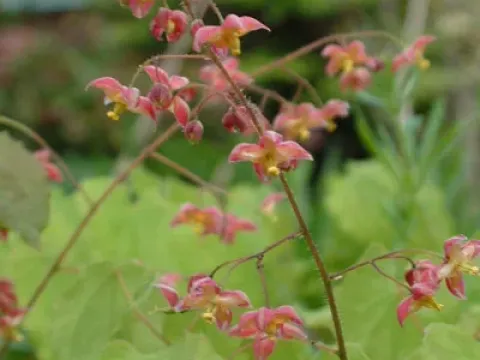
Cambridge barrenwort
Epimedium cantabrigiense
Cambridge barrenwort is a hardy herbaceous perennial belonging to the Berberidaceae family. It is a naturally occurring hybrid between E. alpinum and E. pubigerum, prized for its excellent performance as a resilient groundcover in temperate gardens.
What the section contains
Cambridge barrenwort
The plant thrives best in partial to full shade, making it a perfect selection for woodland gardens or shaded perennial borders. It is essential to protect the foliage from harsh, direct sunlight to prevent leaf scorch and maintain its lush appearance.
Rich, moist, yet well-drained soil is ideal for this cultivar. It prefers neutral to slightly acidic pH levels. Good soil drainage is critical, as stagnant water during the winter months can cause the rhizomes to rot, which is one of the few threats to its longevity.
Climatic requirements are moderate; the plant is known for its high frost tolerance. In areas prone to heavy freezing without snow cover, applying a light organic mulch can help regulate soil temperature and protect the shallow root system.
Routine maintenance involves cutting back old foliage in late winter or early spring. This practice not only clears space for the new, attractive floral display but also allows for better air circulation around the crown of the plant as the growing season begins.
Epimedium cantabrigiense is remarkably resistant to many common garden diseases. However, in poorly drained or overly damp conditions, it may become susceptible to fungal infections such as root rot or Botrytis blight, which thrive in stagnant environments.
Slugs and snails are the most frequent pests associated with this species. They are particularly active in cool, moist conditions and can cause significant damage by feeding on young, emerging foliage and developing floral spikes during the spring months.
Integrated pest management strategies for barrenwort include maintaining clean garden beds free of excessive leaf litter, which often hides mollusks. Using physical barriers like grit or crushed eggshells around the base can also deter them from reaching the plant.
While aphids and mites are less common, they can occasionally appear during periods of heat stress. A simple inspection of the leaf undersides is recommended to catch infestations early and apply mechanical or biological controls if necessary.
By providing the correct environment — specifically well-drained soil and appropriate shade — growers can minimize the need for chemical interventions. The plant's innate hardiness ensures long-term survival with minimal effort for the gardener.