
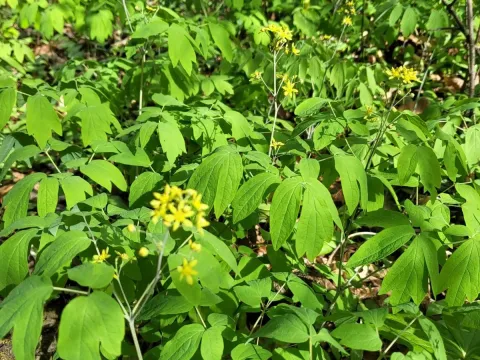
Blue cohosh
Caulophyllum
Blue cohosh is primarily propagated through seeds, which require a cold stratification process to break dormancy. Sowing in the autumn is recommended to allow the seeds to naturally chill during the winter.
What the section contains


Blue cohosh
Seeds should be planted in moist, organic-rich soil at a depth of about 2–3 centimeters. Germination is often slow, and seedlings require consistent moisture to establish their root systems.
Vegetative propagation via rhizome division is an alternative method, best performed in early spring before growth begins. Ensure each section contains healthy buds for successful plant regeneration.
When transplanting divisions, provide adequate spacing to allow for the horizontal growth of the rhizomes. Proper placement is essential, as the plant is sensitive to disturbance once established.
Maintaining a weed-free environment is critical during the first two years of the plant's life, as blue cohosh is not a strong competitor against aggressive invasive weeds.
As a member of the Berberidaceae family, blue cohosh thrives in shaded or semi-shaded environments, mimicking its natural habitat on the forest floor. It does not tolerate direct, intense sunlight.
The ideal soil is loamy, well-draining, and rich in humus with a neutral to slightly acidic pH level. High organic content is essential for long-term health and productivity.
Water requirements are relatively high; the soil should be kept consistently moist but never waterlogged. During dry spells, supplemental irrigation is necessary to prevent wilting.
Blue cohosh performs best in temperate climates with mild winters. In areas with harsh winters, a layer of mulch should be applied to protect the rhizomes from deep freezing.
Regular application of compost or leaf litter helps maintain the soil structure and provides the essential nutrients required for the plant to thrive in a cultivated setting.
Root rot is the most significant threat to blue cohosh, usually caused by poorly drained soil or excessive irrigation. Improving soil porosity is the best preventative measure.
Aphids can occasionally infest new leaf growth, leading to stunting. Monitoring the plants during the spring growth flush allows for early intervention with biological controls.
Slugs and snails can consume young shoots and leaves, necessitating physical barriers or traps when environmental conditions favor these pests.
Preventative cultural practices, such as maintaining proper plant density and ensuring good air movement, significantly reduce the incidence of fungal and bacterial infections.
Avoiding synthetic chemicals is recommended to ensure the purity of the plant, especially since blue cohosh is widely utilized as a potent medicinal herb.
The harvest focuses on the rhizomes, which are typically collected in late autumn when the foliage has died back and the plant's energy has shifted to the roots.
Carefully excavate the rhizomes using garden forks to avoid slicing the material. Gently shake off excess soil, but avoid excessive washing, which can leach out active compounds.
Dry the rhizomes in a cool, dark, and well-ventilated area. Rapid heat or direct sunlight should be avoided to preserve the delicate chemical composition of the roots.
Once dried, the rhizomes should be brittle and easily snapped, indicating low moisture content. Proper drying is crucial to prevent mold growth during long-term storage.
Store the harvested material in airtight, opaque containers in a cool, dry place to protect the medicinal properties from degradation caused by light and heat exposure.