
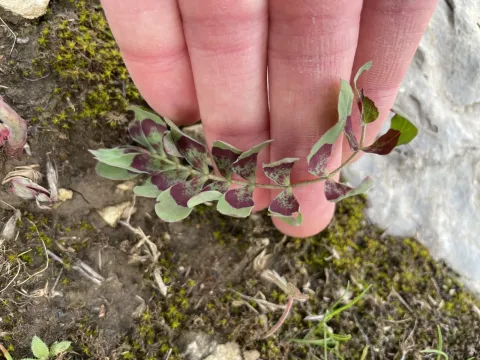
Bongardia
Bongardia
Bongardia species, such as Bongardia chrysogonum, are ephemeral plants characterized by a brief, intensive growth cycle that occurs during spring.
What the section contains

Bongardia
Seeds require specific environmental triggers, including a period of high temperatures followed by cold stratification to break dormancy.
In cultivation, autumn sowing is the most effective method, as it exposes the seeds to the necessary natural cold to ensure spring germination.
The planting depth should be shallow, typically 2 to 3 cm, to prevent the developing shoot from exhausting its reserves before reaching the surface.
Optimal spacing is essential to ensure that each plant receives enough resources during the limited period of active photosynthetic development.
As a member of the Berberidaceae family, Bongardia is a geophytic perennial that utilizes a tuberous storage organ to survive seasonal extremes.
The plant strictly requires excellent soil drainage; waterlogged soil, especially during the dormant summer period, will inevitably cause tuber rot.
Ideal soil conditions consist of sandy or loamy, nutrient-permeable substrates that mimic the dry, rocky environments of its native habitat.
The climatic regime must feature a distinct seasonal shift, providing a wet spring for vegetative growth and a dry, hot summer for maturation.
Bongardia thrives in full sun, as it requires high light intensity to rapidly complete its short vegetative cycle before the summer drought sets in.
While Bongardia is not a traditional mass-market crop, it holds interest as a source of bioactive saponins for the pharmaceutical and chemical sectors.
The yield of tubers is largely dependent on the stability of the spring rainfall and the health of the plant during the initial growth phase.
Yield optimization involves precision soil management, specifically targeting the health of the tuber to ensure high content of active plant compounds.
Harvestable biomass is concentrated in the subterranean organs, making the root-to-shoot ratio a primary metric for agricultural evaluation.
Commercial potential is currently restricted to niche production for botanical research or artisanal medicinal extract preparations.
The most significant threat to Bongardia cultivation is pathogenic fungal infections that target the tuber during the dormancy phase.
Soil-dwelling insects, including wireworms, pose a direct risk by mechanically damaging tubers, leading to entry points for bacterial soft rot.
Dense planting or high humidity during the early spring can lead to outbreaks of powdery mildew, which reduces the plant's ability to store energy.
Competition from invasive weeds during the rapid growth phase can severely limit the photosynthetic potential and lead to smaller tuber size.
Gastropods such as slugs can consume young foliage rapidly, significantly weakening the plant and impacting future development cycles.
Harvesting must be timed exactly with the plant's dormant cycle, starting when the above-ground biomass has turned yellow and withered.
Tubers should be extracted carefully to avoid abrasions or punctures to the outer skin, as these are primary infection points for storage diseases.
Post-harvest processing requires immediate transfer to a shaded, well-ventilated area for curing to lower the moisture content on the tuber surface.
Storage should occur in a cool, dry environment, often using dry sand or perlite as a medium to maintain stability and prevent desiccation.
Proper sorting post-harvest allows for the selection of the most vigorous tubers for replanting, ensuring the sustainability of the crop.