
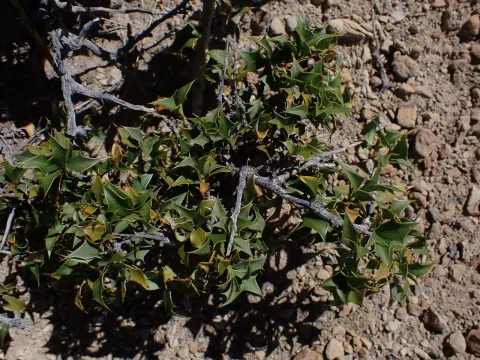
Comber's barberry
Berberis comberi
Comber's barberry (Berberis comberi) is a distinctive shrub belonging to the Berberidaceae family. Native to the mountainous regions of South America, particularly parts of Argentina and Chile, this plant is admired for its architectural form and evergreen or semi-evergreen foliage.
What the section contains
Comber's barberry
Botanically, it is characterized by its stiff, often spiny leaves and clusters of bright yellow flowers that bloom in the spring. These are followed by dark-colored berries, which add to the shrub's aesthetic appeal throughout the later seasons of the year.
To thrive, this plant requires well-drained, fertile soil with a neutral to slightly acidic pH level. It prefers a position in full sun to partial shade, where it is shielded from drying or freezing winds that can damage the foliage and cause significant branch dieback.
Cultural practices include consistent but moderate watering. While the plant is relatively hardy once established, it needs protection during prolonged droughts and requires good air circulation to ensure healthy growth and prevent physiological stress in the root zone.
Maintenance involves occasional light pruning to preserve the plant's natural shape. As it is a slow-growing species, it does not require heavy cutting back; instead, focusing on removing dead or crossing branches helps maintain the health and vigor of the specimen.
Common health issues for Comber's barberry include fungal infections such as powdery mildew and various leaf rusts. These are primarily caused by excessive moisture levels and poor aeration, which favor the spread of fungal spores across the foliage.
Pests that frequently target this species include aphids and barberry sawfly larvae. These pests feed on the succulent leaves and young shoots, potentially causing stunted growth and reducing the plant's overall vitality if left untreated.
Effective management requires the application of targeted insecticides for pests and systemic fungicides for disease control. Integrated pest management, which includes manual removal of pests and pruning of infected areas, is highly recommended for garden settings.
Preventive maintenance, such as avoiding overhead watering, is essential. Keeping the foliage dry significantly reduces the risk of leaf diseases, as it prevents the conditions necessary for spores to germinate and colonize the leaf surface.
Ensuring proper spacing during the planting phase allows for adequate airflow around the shrub. This simple cultural practice is one of the most effective ways to mitigate the risk of common diseases and promote a healthy environment for the plant to mature.