
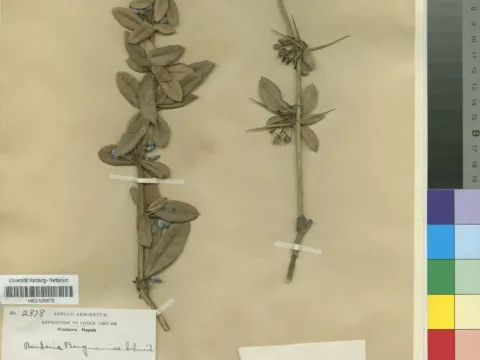
Bergmann's barberry
Berberis bergmanniae
Bergmann's barberry (Berberis bergmanniae) is a notable evergreen shrub species classified within the Berberidaceae family. Originating from the mountainous regions of Western China, it is highly valued for its dense foliage and architectural form.
What the section contains
Bergmann's barberry
The plant exhibits a robust growth habit, often reaching heights between 2 and 3 meters. Its branches are armed with sharp, three-pronged spines, while the deep green leaves remain glossy and leathery throughout the entire calendar year.
Cultivation requires well-draining, moderately fertile soil conditions. While it is adaptable to various soil types, it performs best in slightly acidic to neutral environments. Proper site selection should avoid areas prone to prolonged waterlogging.
Regarding climate, this shrub thrives in temperate zones but requires protection from desiccating winter winds. While moderately cold-hardy, younger plants should be shielded during their first few years to prevent severe frost damage to the evergreen foliage.
In landscaping, this plant is primarily utilized for creating dense, impenetrable screens and hedges. Its year-round structural presence makes it an excellent candidate for formal garden design, providing a stable backdrop for other seasonal flowering plants.
The primary pathological threats to Bergmann's barberry include fungal infections like powdery mildew and leaf rust. These diseases often manifest when the shrub is planted in sites with poor air circulation or excessive humidity levels.
Insect pests such as barberry aphids are common occurrences that feed on the sap of young shoots, leading to stunted growth. Periodic inspections of the underside of leaves are necessary for early detection of these populations.
Leaf-eating caterpillars or sawfly larvae can also cause significant damage during the active growing season. If left untreated, severe defoliation can weaken the overall vitality of the plant, making it more susceptible to environmental stress.
Effective management strategies involve the prompt removal of infected branches to reduce the inoculum load. Chemical interventions should be performed using targeted, environmentally conscious products to avoid harming beneficial pollinator insects.
Maintenance routines should include balanced fertilization and correct pruning techniques. Pruning is essential to open up the canopy, thereby improving air movement and significantly reducing the risk of fungal outbreaks in the dense foliage.