
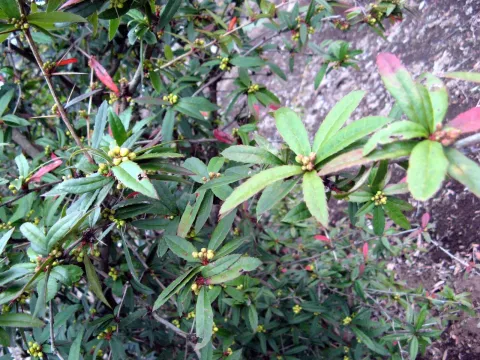
Bloodred barberry
Berberis sanguinea
Bloodred barberry (Berberis sanguinea) is an evergreen shrub belonging to the Berberidaceae family. It originates from mountainous areas in China, thriving in environments that offer moderate moisture and good drainage.
What the section contains
Bloodred barberry
Botanically, this species is defined by its stiff, spiny branches and dark, evergreen foliage. During the fruiting season, it produces deep red berries that stand out against the dark leaves, providing significant ornamental value to garden landscapes.
This shrub requires well-draining soil with a pH ranging from slightly acidic to neutral. It performs best in full sun to partial shade, which ensures consistent growth and prevents the thinning of the inner canopy, a common issue in overly shaded locations.
Cultural practices include periodic pruning to maintain the shape of the hedge and removal of deadwood to promote airflow. Being relatively hardy, it establishes well once the root system is secure, requiring minimal irrigation except during prolonged summer droughts.
In agriculture and landscaping, it is primarily valued for security hedging. The sharp spines make it an excellent barrier plant that deters unauthorized access while maintaining a natural, aesthetic appearance in public and private gardens.
Common plant health issues include powdery mildew, which can develop in humid conditions with poor ventilation. Using fungicides and ensuring adequate spacing between plants are the primary methods for mitigation.
Barberry aphids are frequent pests that congregate on young shoots during the spring. Effective management involves monitoring plant tips and applying horticultural soaps or systemic insecticides when the threshold of infestation is exceeded.