
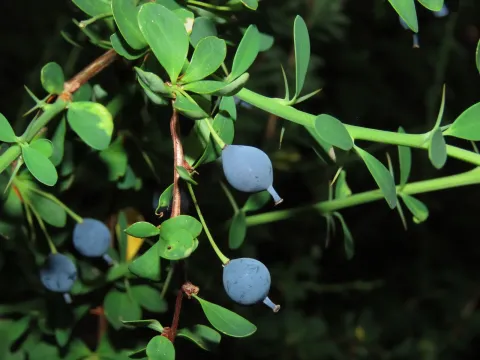
Chillan barberry
Berberis chillanensis
Chillan barberry (Berberis chillanensis) is a perennial deciduous or evergreen shrub belonging to the Berberidaceae family. Originating from the mountain ranges of Chile and Argentina, this species is well-adapted to cool, highland climates with significant moisture levels.
What the section contains
Chillan barberry
The plant thrives in well-lit areas with well-drained, moderately fertile soils. It is particularly valued for its hardiness, as it can withstand fluctuating temperatures common in alpine regions, provided it is protected from extreme winter desiccation.
Botanically, this shrub is characterized by stiff, thorny branches that serve as defensive structures, alongside dense foliage. Its root system is deep and expansive, which provides stability and allows the plant to access nutrients even in relatively poor soil compositions.
Agricultural requirements for Berberis chillanensis focus on maintaining a neutral to slightly acidic soil pH and ensuring optimal soil aeration. Compacted or waterlogged soils should be avoided as they significantly hinder root development and overall plant vigor.
In terms of хозяйственное (economic) use, the plant is cultivated both for its nutritional berries, which are high in bioactive compounds, and as a natural barrier in landscaping. Its dense, thorny nature makes it an excellent choice for functional, wildlife-friendly hedging.
The most common fungal threats to the Chillan barberry include powdery mildew and leaf rust, both of which are triggered by high humidity and poor air circulation within the shrub canopy. Regular monitoring during the peak growing season is essential.
Insects, such as the barberry aphid and various sawfly species, pose the greatest threat to plant health. These pests feed on foliage and young shoots, often leading to defoliation if left unchecked during the early spring months.
Disease management relies heavily on preventative pruning, which removes dead or infested wood and opens up the center of the shrub to better light and airflow. Keeping the planting area free of debris helps reduce overwintering populations of pests.
Chemical control should be used judiciously, prioritizing products that are effective against specific pathogens while minimizing impact on beneficial pollinators. Biological control agents are increasingly recommended for sustainable cultivation practices.
Maintaining strong, vigorous growth through proper fertilization and watering is the best defense against pests and diseases. A well-nourished plant is consistently more resilient to environmental stressors and biotic attacks throughout the year.