
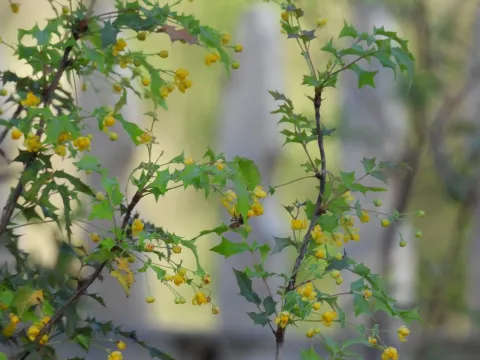
Swasey's barberry
Berberis swaseyi
Swasey's barberry (Berberis swaseyi) is a distinctive member of the Berberidaceae family. Originating from the rocky terrains of Texas, this species is highly valued for its adaptation to challenging environmental conditions and unique ornamental foliage.
What the section contains
Swasey's barberry
The crop thrives in well-drained, limestone-based soils. It is essential to ensure that the site has optimal sunlight exposure, as this plant requires high light intensity to maintain its characteristic structure and vibrant leaf pigmentation throughout the growing season.
Regarding agrotechnics, the species is remarkably drought-tolerant once established. Growers should prioritize deep, infrequent watering during the first year of planting, followed by minimal irrigation as the root system matures and adapts to the local soil profile.
Climate requirements involve moderate temperatures, although the plant shows significant resilience to heat stress. It is best suited for regions with mild winters, as excessive freezing can cause dieback in younger, less lignified stems.
Management practices include basic maintenance such as selective pruning to encourage bushiness. Fertilization should be kept to a minimum; excessive nitrogen levels can lead to succulent growth that is more prone to environmental damage and pest infestations.
Fungal pathogens such as powdery mildew are the primary threat, especially in areas with stagnant air circulation. Ensuring proper spacing between plants is a critical preventive measure to maintain airflow and reduce humidity levels around the foliage.
Aphids and scale insects represent the most common pest threats to this barberry species. Integrated pest management, including the use of horticultural oils and attracting beneficial predatory insects, is recommended for long-term control.
Root rot, caused by various species of Phytophthora, can become an issue if soil drainage is compromised. To prevent this, growers must avoid heavy irrigation schedules and ensure the planting site is slightly elevated if the natural soil is prone to saturation.
Leaf spot infections are often associated with unhygienic conditions in the orchard. Implementing a rigorous sanitation program, including the removal of dead or diseased biomass, is vital to prevent the carryover of inoculum between growing seasons.
Regular diagnostic screening of the plants allows for the early detection of stress factors. By maintaining a healthy environment and monitoring for early symptoms, the longevity and aesthetic value of the shrub can be effectively preserved.