
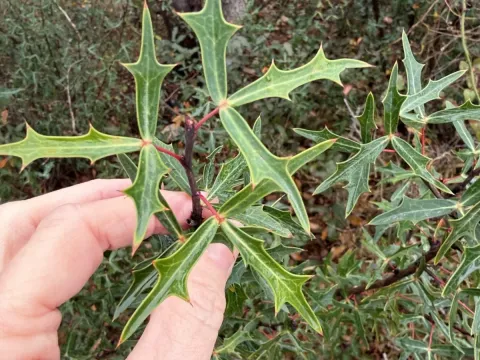
Three-leaf barberry
Berberis trifoliolata
The Three-leaf barberry, scientifically known as Berberis trifoliolata, is an evergreen shrub belonging to the Berberidaceae family. Native to the arid regions of Texas and Mexico, it is a hardy plant adapted to survive in harsh, dry environments.
What the section contains
Three-leaf barberry
Cultivation of this species requires well-drained, alkaline, and often rocky soil. It is extremely sensitive to waterlogging, which can cause fatal root rot. Therefore, selecting a site with superior drainage is the most critical factor for successful establishment.
Botanically, the plant is characterized by its trifoliate leaves with spiny margins, which serve as a defense mechanism against browsers. It grows as a dense, rounded shrub reaching up to 2 meters in height, adding significant structural interest to any planting scheme.
The species thrives in full sun, which is essential for maintaining its vigor and promoting abundant flowering. While it is tolerant of high temperatures, it requires protection from severe prolonged frost in colder climates to prevent dieback.
In agricultural and landscape settings, the Three-leaf barberry is utilized for creating impenetrable hedges and fences. Furthermore, its berries are harvested for culinary applications, and its bark has traditionally been explored for various medicinal properties.
The primary diseases affecting this crop are fungal infections such as powdery mildew and rust. These conditions are typically triggered by high humidity levels and poor airflow within the shrub's dense foliage.
Pests that pose the most significant risk include aphids and sawfly larvae, which target young growth. Regular monitoring during the active growth season is necessary to manage these populations before they cause structural damage.
Integrated pest management, including the use of appropriate insecticides and careful environmental control, is the standard approach for maintaining plant health. Avoiding overhead irrigation is a key cultural practice to reduce disease pressure.
Root rot caused by Phytophthora or other fungi is a major concern in heavy or poorly drained soils. Once symptoms appear, it is often difficult to save the specimen, highlighting the need for preventative soil management.
Maintaining plant vitality through balanced fertilization and proper pruning helps the shrubs build natural resistance to common pathogens. Pruning should be performed after the flowering period to minimize stress on the plant.