
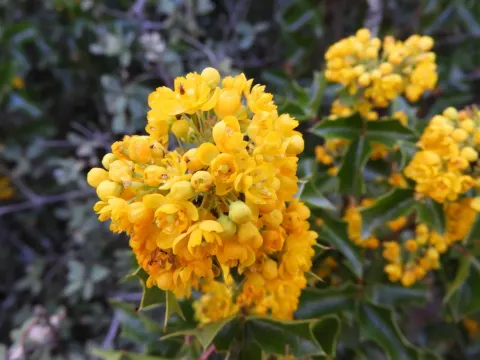
Three-leaf barberry
Berberis eutriphylla
Three-leaf barberry (Berberis eutriphylla) is a distinct shrub belonging to the Berberidaceae family. Native to the mountainous regions of South America, it has adapted to rocky environments and specific altitude-related climatic patterns.
What the section contains
Three-leaf barberry
The plant thrives in full sun exposure. Adequate light is essential for the plant to maintain its characteristic foliage density and promote healthy growth cycles throughout the spring and summer seasons.
Soil requirements include well-drained, porous earth. The species is highly susceptible to root rot if placed in heavy clay or stagnant water conditions, necessitating proper site preparation with grit or sand amendments.
Regarding climate, this barberry prefers moderate temperatures but can withstand significant fluctuations characteristic of high-altitude habitats. It requires consistent moisture during the establishment phase, transitioning to moderate water needs as it matures.
Agricultural maintenance involves regular pruning to keep the shrub in shape and prevent overgrowth, which can otherwise lead to poor air circulation and health issues within the dense interior branches.
The primary pathological threats to this species are powdery mildew and rust fungi, which are often exacerbated by high humidity levels or planting in confined, non-ventilated spaces.
Pest populations such as aphids are frequent visitors, targeting tender new growth and significantly weakening the plant if left untreated during the early development stages.
Scale insects can also pose a persistent problem, attaching themselves to the stems and branches and extracting vital sap, which leads to stunted growth of the shrub.
Integrated pest management strategies involve the use of organic horticultural oils for early infestations and specific chemical treatments for severe outbreaks during the active growing season.
- Regular inspection for leaf discoloration.
- Application of sulfur-based fungicides for mildew.
- Removal of infected debris to prevent fungal recurrence.