
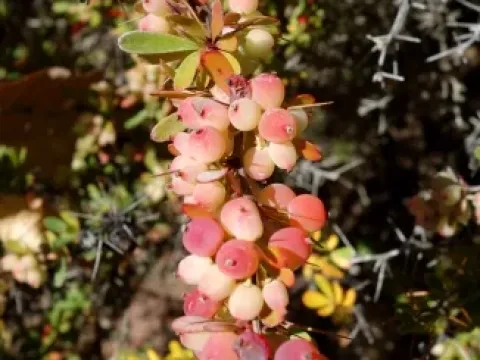
Small-leaved barberry
Berberis parvifolia
Propagation of Berberis parvifolia is most effective via cuttings, as seed germination requires a long stratification process to break dormancy effectively.
What the section contains
Small-leaved barberry
Seeds are typically sown outdoors in late autumn, allowing them to undergo natural cold stratification throughout the winter months before spring sprouting.
Softwood cuttings are taken during the early summer months, ensuring they are kept in a humid environment to promote rapid root development.
When planting young specimens into their final position, ensure the roots are spread out gently and the planting hole is well-prepared with organic matter.
For hedge cultivation, space the plants about 40 to 50 centimeters apart, which allows for uniform growth and healthy development of the shrubbery.
Small-leaved barberry belongs to the Berberidaceae family and is known for its remarkable resilience and ability to thrive in various climatic conditions.
The shrub prefers sunny locations with well-drained soil, as it does not tolerate waterlogged areas or heavy, clay-based substrates that hold too much moisture.
It adapts well to a wide range of soil pH levels, although it performs best in soils that are slightly alkaline to neutral in their chemical composition.
During the first year, young plants require regular irrigation to establish a strong root system, but mature bushes show significant drought tolerance.
Regular maintenance involves light pruning to maintain the desired shape and size, which also helps improve overall plant vigor and foliage density.
Powdery mildew is a common fungal disease that affects this species, particularly when plants are grown in overcrowded or poorly ventilated conditions.
Rust infections can also pose a problem for Berberis species, causing spotted foliage that may drop prematurely if not treated with appropriate fungicides.
Aphids are the primary insect pests that target the soft, emerging growth, which can lead to curling leaves and a general reduction in plant health.
Effective management includes keeping the garden clean by removing fallen leaves and debris where pathogens and pests often choose to overwinter.
Integrated pest management strategies are recommended, utilizing both mechanical pruning and targeted chemical treatments when an infestation is detected.