
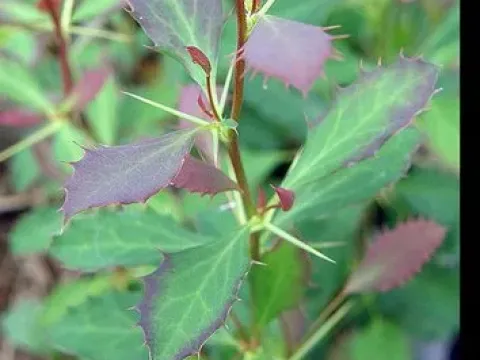
Thread-leaved barberry
Berberis mitifolia
Berberis mitifolia, commonly known as the thread-leaved barberry, is a woody perennial shrub belonging to the family Berberidaceae, native to the high-altitude mountainous regions of China.
What the section contains
Thread-leaved barberry
This species is distinguished by its unique, slender, and thread-like foliage, which provides a delicate texture to the landscape, making it a highly desirable specimen for ornamental gardens.
The shrub thrives in well-drained, fertile soil with a neutral to slightly acidic pH. It is highly intolerant of waterlogged conditions, which can lead to root rot and eventual plant decline.
It prefers full sun exposure to maintain its compact shape and vibrant leaf color. While it exhibits good cold hardiness, it benefits from a sheltered position in climates with extreme winter winds.
In terms of horticulture, it serves as an excellent candidate for formal hedges, rock gardens, and container planting, offering year-round interest due to its structural form.
Powdery mildew represents the primary pathological threat to this barberry species, especially during periods of high humidity and stagnant air circulation within the shrub canopy.
Rust diseases can also infect the foliage, particularly when the shrub is planted in close proximity to grass species that act as secondary hosts for the fungal pathogens.
Aphid infestations are the most common pest problem. These small insects congregate on tender new growth, causing curling and stunted development of the shoots during the spring season.
Effective management involves consistent pruning to promote airflow through the branches, which creates an environment less favorable for fungal spores to germinate and spread.
Regular inspection and the application of horticultural oils or targeted insecticides help maintain the plant's health and vigor throughout the growing season.