
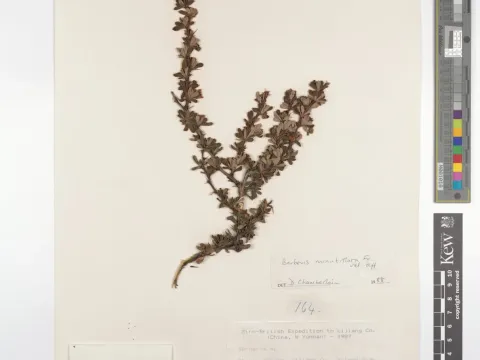
Small-flowered barberry
Berberis minutiflora
Small-flowered barberry (Berberis minutiflora) is a member of the Berberidaceae family. It is a hardy, deciduous shrub known for its dense habit and clusters of small, delicate flowers that bloom in late spring.
What the section contains
Small-flowered barberry
The plant originates from the mountainous regions of Central Asia. It thrives in open, sunny locations where it receives ample light, which is essential for maintaining its robust structure and overall plant vigor.
Regarding soil, this species prefers well-drained, fertile loams with a neutral or slightly alkaline pH. It is highly sensitive to waterlogged conditions, which can lead to root rot; therefore, good site selection with drainage is a priority.
Climatically, it is a highly adaptable species, accustomed to the temperature fluctuations of alpine environments. It remains dormant during winter and exhibits excellent cold hardiness once the plant is established.
Cultivation practices involve seasonal pruning to manage size and shape, as well as occasional fertilization in early spring to support new growth. Mulching around the base is recommended to regulate soil temperature and moisture levels.
The primary pathological threats to this shrub include powdery mildew and rust. These fungal infections are typically triggered by poor air circulation, high humidity, or excessive overhead watering, especially during warm spells.
To mitigate fungal outbreaks, it is crucial to ensure proper spacing between plants and to prune the center of the shrub periodically. If an infection is identified, application of sulfur-based or systemic fungicides is advised.
Insect pests, most notably the barberry aphid and the sawfly larvae, can significantly impact the foliage. These insects feed on the leaf tissues, which may weaken the shrub if the infestation is not managed early.
Integrated pest management strategies should be employed, starting with manual removal of larvae and moving to the use of horticultural oils or approved insecticides if economic thresholds are reached.
Sanitation practices, such as removing fallen leaves at the end of the growing season, are essential. By reducing the overwintering population of pests and fungal spores in the soil, you significantly lower the risk of future infestations.