
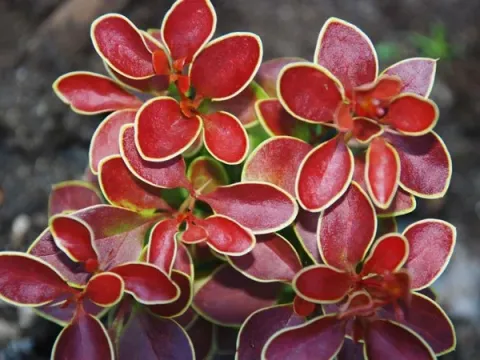
Siebold's barberry
Berberis sieboldii
Siebold's barberry (Berberis sieboldii) is a deciduous shrub species within the Berberidaceae family. It is native to Japan and is highly valued in the nursery industry for its distinct ornamental qualities and structural beauty.
What the section contains
Siebold's barberry
The plant typically grows as a sprawling shrub, reaching up to 2 meters in height. Its primary feature is the spectacular autumn foliage, which turns from vibrant green to intense shades of red and orange, creating a high-contrast focal point in any garden.
Cultivation requires full sun exposure to maintain its dense habit and foliage coloration. While the plant can tolerate partial shade, insufficient light often results in elongated, sparse branches and poor color development during the fall season.
The soil requirements are relatively moderate. Siebold's barberry thrives in well-drained loamy soils but displays a high degree of adaptability to various pH levels, provided the planting site does not suffer from prolonged waterlogging.
Maintenance involves pruning in early spring to shape the plant and remove deadwood. This practice encourages new, vigorous growth and maintains the desired structure, making the shrub a perfect candidate for hedges or mass planting.
Powdery mildew is the most frequent disease affecting Berberis sieboldii. It appears as a white, powdery coating on leaves, usually triggered by stagnant air and high humidity levels around the shrub's canopy.
Rust, another common fungal issue, can cause significant damage to the plant's aesthetic appeal. Infected leaves show yellow-orange pustules, which may lead to premature leaf drop if not managed correctly with fungicide applications.
Barberry aphid is a primary insect pest that targets young foliage. These pests suck nutrients from the plant, often leading to stunted growth and the secondary development of sooty mold on the honeydew they secrete.
Scale insects can also infest the stems and branches of the shrub. These pests are often overlooked until the plant shows signs of decline, such as yellowing leaves or dieback of smaller twigs, requiring specialized oil-based treatments.
Effective management includes regular monitoring and maintaining good air circulation through proper pruning. Integrated pest management, involving cultural practices and chemical control, is essential for preserving the health and appearance of the plants.