
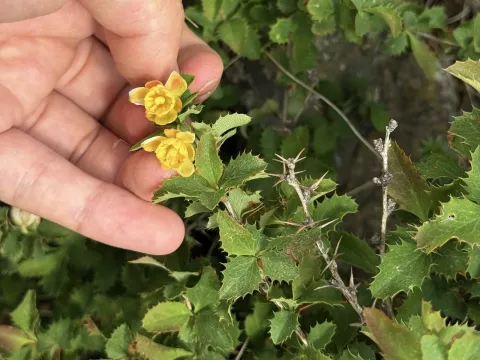
Siberian barberry
Berberis sibirica
Siberian barberry (Latin: Berberis sibirica) is a deciduous shrub species belonging to the Berberidaceae family, known for its extreme resilience in harsh mountain environments.
What the section contains
Siberian barberry
The native range of this shrub spans across the mountainous regions of Siberia, Mongolia, and parts of Central Asia. It thrives in high-altitude environments characterized by rocky slopes, stony soils, and prolonged exposure to freezing temperatures.
Botanically, it is a low-growing, dense shrub featuring spiny branches and leathery leaves, which are structural adaptations to minimize transpiration in dry and windy conditions. The plant is remarkably slow-growing, reflecting its adaptation to short vegetative seasons.
Cultivation requirements for this species are specific: it strictly demands excellent drainage and prefers slightly alkaline or calcareous soils. It is highly intolerant of waterlogged conditions, which often lead to root rot in poorly managed garden soils.
In terms of light exposure, Siberian barberry requires full sun to maintain its compact growth form and to promote annual flower and fruit production. It is essentially a low-maintenance plant once established in a suitable rocky or well-drained site.
The main pathological threats to this species include powdery mildew, which can become prevalent in conditions of poor air circulation and high humidity around the shrub's center.
Various aphid species, specifically those adapted to barberry hosts, are the most frequent pests that attack young shoots and foliage during the spring growth phase.
Managing the health of these shrubs involves regular inspection and the removal of deadwood or diseased branches to maintain optimal airflow and light penetration throughout the crown.
Chemical control should be applied sparingly, as the plant's slow metabolism means that it can be sensitive to strong pesticides if they are applied incorrectly.
Cultural control strategies, such as selecting resistant cultivars and maintaining appropriate site spacing, remain the most effective methods for managing plant health in landscape settings.