
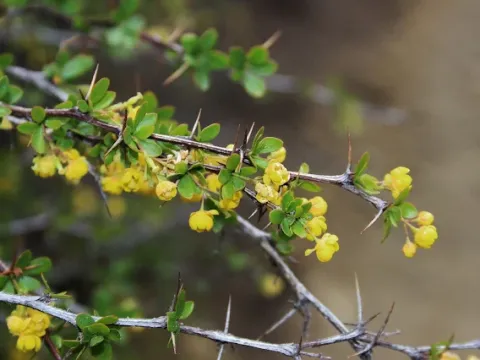
Cretan barberry
Berberis cretica
Cretan barberry (Berberis cretica) is a perennial deciduous shrub belonging to the Berberidaceae family. It is native to the Eastern Mediterranean, specifically found on the island of Crete and parts of Greece, thriving in rugged, high-altitude terrain.
What the section contains
Cretan barberry
This species requires full sun exposure to maintain its compact growth habit and vibrant foliage coloration. It is well-adapted to rocky, calcareous soils with excellent drainage, which is crucial for preventing waterlogging and subsequent root decay.
In terms of climatic adaptation, the shrub is highly drought-tolerant, making it an excellent candidate for xeriscaping or low-maintenance rock gardens. It can withstand significant temperature fluctuations typical of its mountainous origin, provided the soil is not overly saturated.
Agrotechnical care includes light annual pruning in late winter or early spring to remove dead wood and encourage dense, thorny growth. Fertilization is generally not required in rich soils, though a light layer of organic mulch can help retain moisture in extremely arid environments.
The plant is widely valued for its ornamental appeal in landscape architecture, particularly for creating impenetrable hedges. Its fruit is occasionally harvested for use in culinary applications, similar to other Berberis species known for their tart, acidic profile.
Aphids are the primary pests that affect the succulent new growth of Cretan barberry. If left unchecked, these insects can weaken the plant and serve as vectors for secondary viral infections, necessitating regular inspection.
Powdery mildew is a common fungal threat, typically manifesting as a white, dusty coating on the leaves during periods of stagnant humidity. Proper spacing between plants to ensure good air circulation is the best preventative strategy.
Rust diseases are occasionally problematic, specifically those related to the Puccinia genus. Due to the potential impact on surrounding agriculture, it is advised to plant this species away from wheat or cereal crop areas to break the disease cycle.
Root rot, often caused by poor drainage or overwatering, remains the most lethal condition for Berberis cretica. Ensuring the planting hole is layered with gravel or coarse sand is essential for its long-term survival in garden settings.
Various larvae and caterpillars can feed on the foliage during the summer months. Integrated pest management, including the use of neem oil or targeted biological controls, is highly recommended to protect the shrub's ornamental value.