
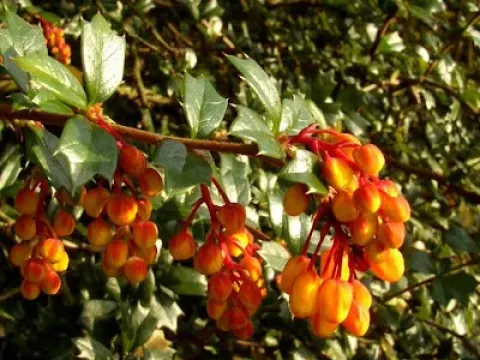
Cox's barberry
Berberis coxii
Cox's barberry (Berberis coxii) is an evergreen shrub belonging to the Berberidaceae family. Originally native to the mountainous regions of Myanmar (Burma), this plant is highly regarded for its dense foliage and sharp spines. Its evergreen nature makes it a significant botanical specimen for year-round ornamental display.
What the section contains
Cox's barberry
This crop thrives in well-drained, fertile soils with a slightly acidic to neutral pH. It is crucial to avoid waterlogged conditions, as the root system of Berberis coxii is sensitive to excessive moisture. Incorporating organic matter into the soil during the planting phase promotes healthier root development and vigorous growth.
In terms of climate, Cox's barberry prefers temperate conditions with protection from harsh, drying winds. While it can withstand moderate frost, young specimens benefit from protective mulching during the first few winters. It performs best in partial shade, where it receives sufficient light without being exposed to scorching afternoon sun.
Agricultural management includes regular but moderate irrigation, especially during the establishment period. Pruning should be performed in early spring to maintain the desired shape and remove any deadwood. Applying a balanced fertilizer in the early spring, as new growth emerges, supports the plant's overall health and vitality.
The primary use of Cox's barberry is in landscaping and environmental design. Due to its dense, thorny growth, it is frequently utilized for security hedges, decorative borders, and as a structural element in woodland gardens. It provides excellent cover for local fauna while adding aesthetic value to the landscape.
Common plant diseases affecting this species include powdery mildew and rust. These fungal infections are often encouraged by poor air circulation and high humidity. Maintaining proper spacing and pruning helps to minimize these risks significantly.
The most common pests for Berberis coxii are aphids and scale insects, which target the underside of the leaves and stems. Regular monitoring of the foliage is recommended to detect infestations early. In cases of significant damage, integrated pest management practices should be employed to control the population.