
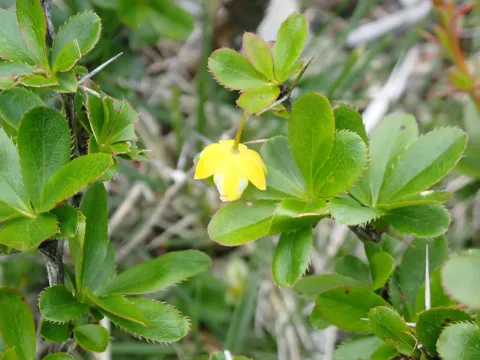
Morrison barberry
Berberis morrisonensis
Morrison barberry (Berberis morrisonensis) is a perennial deciduous shrub belonging to the Berberidaceae family. Native to the high mountain regions of Taiwan, this species is well-adapted to rocky terrains and alpine environmental conditions.
What the section contains
Morrison barberry
To ensure healthy development, this shrub requires a location with full sun exposure, although it can tolerate partial shade in hotter climates. It thrives in cool, well-ventilated areas, reflecting its high-altitude origins where air circulation is constant.
The ideal soil for Berberis morrisonensis is gritty, well-drained, and slightly acidic to neutral. Providing excellent drainage is crucial, as the roots are sensitive to waterlogging, which can lead to rapid decay during wet winter months.
Regarding maintenance, this species requires very little intervention once established. It is a slow-growing shrub that benefits from light pruning in early spring to maintain a dense, attractive shape and to remove any dead or damaged branches caused by winter frost.
Watering should be managed carefully; young plants require consistent moisture to establish their root systems, but mature specimens are quite drought-tolerant. Mulching around the base helps maintain soil temperature and moisture levels without the risk of over-saturation.
Common pathological threats include fungal infections such as powdery mildew and rust, which are particularly prevalent in regions with high humidity or poor air movement. Proper spacing between plants is essential to mitigate these risks.
Pest issues often involve aphids, which prefer the tender growth of new shoots during the spring season. Early detection and the use of insecticidal soap are usually effective methods for controlling these minor infestations before they cause significant damage.
Root rot is another major threat if the soil medium lacks sufficient drainage. Preventing this involves ensuring that the garden bed is elevated or amended with inorganic materials like gravel or volcanic rock to allow excess moisture to pass through.
During the growing season, a regular inspection of the underside of the leaves is recommended to monitor for early signs of insect activity or fungal spotting. Removing heavily infected foliage and destroying it helps break the life cycle of common plant pathogens.
Overall, maintaining the plant's vigor through appropriate sunlight, correct pruning techniques, and avoiding excessive overhead irrigation will drastically reduce the likelihood of these common horticultural threats impacting the specimen.