

Reference · Crops
Common tansy
Tanacetum L.
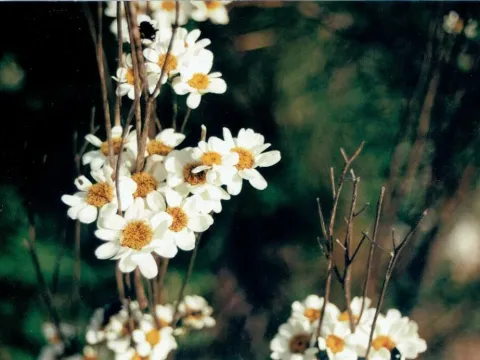
Common tansy (Tanacetum vulgare L.) is a perennial herbaceous plant belonging to the Asteraceae family, widely recognized for its medicinal and pest-repelling properties.
8
items
What the section contains
 Dalmatian chrysanthemum
Tanacetum cinerariifolium (Trevir.) Sch. Bip.
6 products
Dalmatian chrysanthemum
Tanacetum cinerariifolium (Trevir.) Sch. Bip.
6 products
 Common Tansy
Tanacetum vulgare L.
Common Tansy
Tanacetum vulgare L.
 Costmary
Tanacetum balsamita L.
Costmary
Tanacetum balsamita L.
 Feverfew
Tanacetum parthenifolium (Willd.) Sch. Bip.
Feverfew
Tanacetum parthenifolium (Willd.) Sch. Bip.
 Feverfew
Tanacetum parthenium (L.) Sch. Bip.
Feverfew
Tanacetum parthenium (L.) Sch. Bip.
 Painted daisy
Tanacetum coccineum (Willd.) Grierson
Painted daisy
Tanacetum coccineum (Willd.) Grierson
 Silver lace
Tanacetum ptarmiciflorum (Webb & Berthel.) Sch. Bip.
Silver lace
Tanacetum ptarmiciflorum (Webb & Berthel.) Sch. Bip.
 Yarrow-leaved tansy
Tanacetum achilleifolium (M. Bieb.) Sch. Bip.
Yarrow-leaved tansy
Tanacetum achilleifolium (M. Bieb.) Sch. Bip.
Marketplace
Products in this section · 6


Trifluralin 480 g/L, herbicide
F.A.GAN Chemical Manufacturers Ltd. Israel, member
Herbicides
0
0
3 offers
9.93 €per 1 l
Buy

Common tansy
The crop can be propagated through seeds, sown in late autumn or early spring, or via rhizome division, which is the preferred method for commercial cultivation.
When using seeds, they should be sown shallowly, about 1-2 cm deep, as they require sufficient light to germinate effectively and produce vigorous seedlings.
For rhizome division, sections with buds are planted in holes, maintaining a spacing of 40-50 cm between plants to allow for healthy development and air circulation.
Proper plant density is critical for managing the crop and ensuring that the plants have sufficient space to produce high-quality flower heads for harvesting.
Tansy is undemanding regarding soil types, but it thrives best in fertile, well-drained loamy soils with a neutral or slightly acidic pH balance.
The plant is highly heliophilic and requires full sun exposure; shade conditions significantly reduce the concentration of essential oils in the inflorescences.
While tolerant to drought, the plant dislikes waterlogged conditions, which can lead to root rot and other moisture-related diseases affecting the crop health.
Weed control is essential during the initial growth stages, as common tansy competes poorly with fast-growing invasive weeds in the first year of establishment.
Applying balanced mineral fertilizers in the early stages helps boost plant growth, although excessive nitrogen should be avoided to prioritize reproductive parts.
Peak yields are typically observed in the third and fourth years of growth, provided that the soil is properly maintained and kept free of major weeds.
Commercial plantations can yield approximately 10-15 quintals of dried flower heads per hectare when optimal agronomic practices are strictly followed.
The economic value is primarily determined by the quality of the essential oil content, which is directly influenced by the timing and method of harvesting.
Regular cultivation of rows helps maintain soil aeration, which promotes healthier root growth and contributes to a more consistent annual yield.
Implementing a proper irrigation schedule during dry spells can significantly increase the number of flower heads and overall biomass production per acre.
Due to its high concentration of active compounds, such as thujone, common tansy is naturally resistant to many pests that typically affect other crops.
Powdery mildew is the most common threat, especially in dense plantings with poor ventilation and high humidity, requiring careful site selection and management.
Root rot can occur if the field has poor drainage; therefore, selecting fields with natural slopes or well-drained soil is a key preventative measure.
Crop rotation is recommended to prevent the buildup of soil-borne pathogens, with a break of at least 4-5 years before replanting on the same site.
Generally, the use of synthetic pesticides is unnecessary and discouraged, as tansy is primarily cultivated for organic and medicinal applications.
The harvest should occur during the full blooming phase when the flowers are bright yellow and the lower florets begin to open uniformly.
Flowers are cut manually or using specialized machinery, keeping the stem length minimal (2-3 cm) to ensure the purity and quality of the raw material.
Post-harvest, the flowers must be moved quickly to drying facilities to prevent heat buildup and the loss of volatile essential oils in the plant tissue.
Drying is performed in well-ventilated sheds or professional dryers at temperatures not exceeding 45°C to preserve the integrity of the active ingredients.
Finished product should be stored in cool, dark, and dry conditions using breathable packaging to maintain its quality over extended storage periods.