
Painted daisy
Tanacetum coccineum (Willd.) Grierson
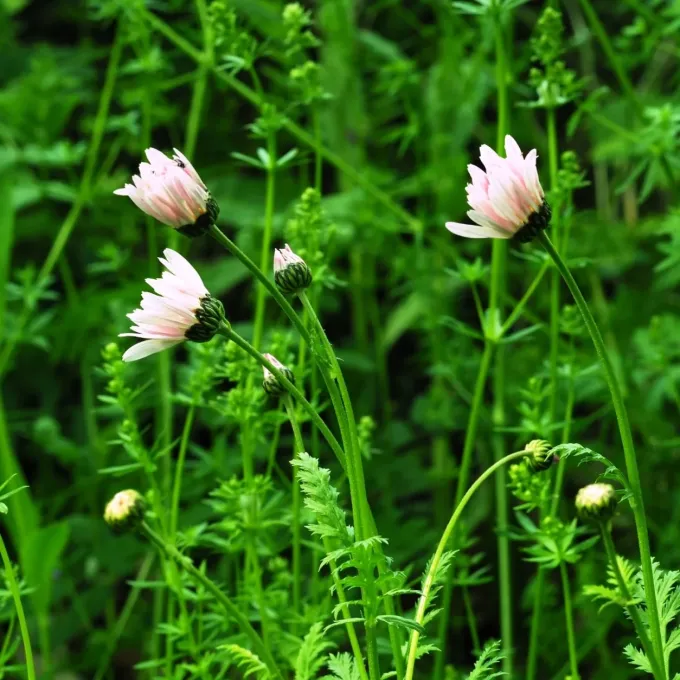
Description
Sowing dates
Sowing seeds of Tanacetum coccineum should ideally begin in March or April using a light, well-draining seed-starting mix in trays.
Seeds require light for germination, so they should be sown on the surface and barely covered with a fine layer of soil or vermiculite.
When transitioning to the garden, plant seedlings in late spring after the risk of frost has passed, spacing them approximately 30-40 cm apart.
Direct seeding in the field can be done in late spring or late autumn in milder climates, ensuring the ground is prepared by loosening the soil depth.
For vegetative propagation, dividing mature clumps in early spring is highly effective and helps maintain the health and vigor of the plants.
Growing requirements
The painted daisy belongs to the Asteraceae family and is known for its vibrant, daisy-like flowers that can add significant color to any landscape.
This species thrives in sunny locations with well-drained, fertile soil. It is essential to avoid sites where water accumulates, as root rot is a common issue.
The plant is highly hardy and can withstand varying temperature ranges, making it suitable for many temperate agricultural and horticultural zones.
Regular maintenance, including weeding and soil aeration around the root zone, ensures that the plants reach their full potential during the growing season.
Native to the Caucasus and Asia Minor, it adapts well to soils that are slightly acidic to neutral, provided they are rich in organic matter.
Main diseases and pests
Common plant health issues include powdery mildew, which develops in humid or poorly ventilated conditions, leading to white foliage patches.
Pests like aphids and spider mites may target the plant during dry spells, potentially weakening the stems and reducing floral yield.
Integrated pest management, including cleaning debris and checking plants regularly, is the best strategy to prevent major outbreaks in the field.
If chemical or biological intervention is necessary, select products labeled for use on Asteraceae plants to avoid damaging the beneficial insect population.
Crop rotation and selecting resistant cultivars help minimize the risk of soil-borne diseases that can impact the longevity of the perennial roots.
Harvesting
In addition to its decorative appeal, Tanacetum coccineum is harvested for its insecticidal properties, containing naturally occurring pyrethrins.
The flower heads should be harvested during peak bloom for the highest concentration of active compounds, followed by immediate drying in a shaded area.
In landscaping, the plant serves as an excellent cut flower, often lasting long in vases if harvested while the florets are still fully expanded.
Post-harvest care involves cutting back the spent stems, which encourages the plant to store energy for the subsequent year's development.
Proper storage of dried material in cool, dark containers is critical to maintain the chemical potency of the harvested flower heads for agricultural use.