
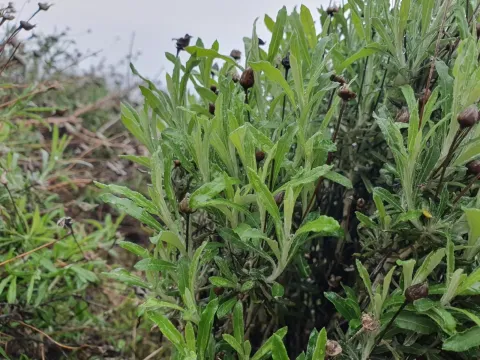
Phagnalon
Phagnalon
Phagnalon is a genus within the Asteraceae family that typically thrives in rugged, arid environments. Propagating the plant from seeds requires a substrate that mimics its natural habitat: sandy, well-draining, and low in organic matter.
What the section contains
 Phagnalon barbeyanum
Phagnalon garamantum
Phagnalon garamantum
Phagnalon barbeyanum
Phagnalon barbeyanum
Phagnalon garamantum
Phagnalon garamantum
 Phagnalon graecum
Phagnalon graecum
Phagnalon graecum
 Phagnalon hansenii
Phagnalon hansenii
Phagnalon hansenii
 Phagnalon pygmaeum
Phagnalon saxatile
Phagnalon saxatile
Phagnalon pygmaeum
Phagnalon pygmaeum
Phagnalon saxatile
Phagnalon saxatile
 Phagnalon sordidum
Phagnalon sordidum
Phagnalon sordidum
 Rock Phagnalon
Phagnalon rupestre
Rock Phagnalon
Phagnalon rupestre
Phagnalon
Sowing is best performed in early spring. The seeds are extremely small, necessitating surface sowing or minimal covering with a fine layer of substrate. Light exposure is essential for stimulating germination, so avoid burying the seeds deep.
Maintaining a stable temperature around 18-22 degrees Celsius ensures optimal germination rates. Using a light misting technique prevents the seeds from being displaced or washed away while keeping the medium slightly moist.
Once seedlings develop their first true leaves, they are ready for thinning or individual potting. Patience is required as Phagnalon exhibits a slower initial growth rate compared to typical annual crops, focusing energy on root system establishment.
Acclimatizing the seedlings to direct sunlight is crucial before transplanting them into their final outdoor location. A hardening-off period of 7-10 days allows the young plants to adjust to fluctuations in humidity and temperature.
The primary success factor for Phagnalon cultivation is perfect drainage. The plant is highly sensitive to root rot, making it unsuitable for heavy soils or areas with poor water management. Rocky or gravelly soils are ideal for growth.
Full sun is non-negotiable for this genus. Phagnalon is adapted to Mediterranean-style climates, thriving in intense light which keeps its foliage compact and healthy. Shaded areas lead to etiolated, weak growth and increased disease susceptibility.
Watering should be sparse. The plant is a xerophyte, capable of utilizing deep roots to access moisture during droughts. Irrigation should only occur when the soil is completely dry, and overhead watering should be avoided to prevent foliar decay.
Soil fertility requirements are minimal. Excessive fertilization, particularly nitrogen, results in overly succulent growth that is less resistant to both heat stress and cold weather. A lean, mineral-rich soil profile is preferred.
Protection from severe frost is necessary in colder climates. In regions where temperatures drop significantly below freezing, container cultivation is recommended, allowing the plants to be moved to a protected, unheated greenhouse or porch during winter.
Yield estimation for Phagnalon is measured in terms of aerial biomass for herbal production. Given its slow-growing nature, high-volume production is rarely achieved in a single season, making it a specialized or boutique crop.
The total yield potential is heavily dependent on the plant's age. Second and third-year plants provide a significantly higher biomass of flowering stems compared to first-year specimens, justifying a multi-year cropping cycle.
Quality of the yield is determined by the timing of the harvest. Collectors and growers target the peak blooming period, which corresponds to the maximum concentration of secondary metabolites, such as flavonoids and terpenes, within the plant tissue.
Sustainable harvesting techniques ensure the longevity of the plant base. Taking no more than 50% of the biomass per season allows the plant to photosynthesize effectively and maintain reserves for the following season.
Standardizing yields requires a homogeneous plot management strategy. Uniform planting distances and consistent weeding practices help create a manageable field, though yields remain modest compared to traditional medicinal herbs.
Root rot caused by Oomycetes and various soil fungi represents the most significant threat. These pathogens are almost exclusively triggered by waterlogged conditions or poor air circulation around the root zone, making drainage the main preventive measure.
Pests such as aphids may colonize the new growth during the spring flush. While Phagnalon is generally resilient, severe aphid infestations can weaken the plant and facilitate the entry of secondary viral or fungal infections.
Spider mites are a common nuisance during prolonged periods of high heat and low humidity. Their presence causes the foliage to lose its vibrant color and eventually leads to necrosis of the leaf tissues if left untreated.
Competition from invasive weeds is critical in the early growth stages. Phagnalon lacks the canopy density to shade out surrounding weeds, necessitating frequent manual weeding to ensure the plants get enough light and nutrients.
Botrytis (gray mold) can occur in the inflorescences if the weather turns humid during the flowering phase. Proactive management involves maintaining excellent spacing between plants to ensure constant airflow, effectively inhibiting mold development.
Harvesting should be conducted during the middle of the day, once all dew has evaporated. Dry material is vital to prevent mold during the post-harvest processing phase and ensures the long-term viability of the product.
The flowering stems should be cut using sharp, sanitized pruning shears. Making clean cuts prevents crushing the stems and reduces the risk of tissue trauma, which allows for better wound healing for the plant.
Drying must take place in a cool, dark, and well-ventilated space. Keeping temperatures below 40 degrees Celsius prevents the rapid oxidation of delicate oils and essential compounds responsible for the plant's unique aroma.
Storage should be in airtight, non-reactive containers (glass or lined paper). This keeps the moisture content stable and protects the dried herbal material from UV radiation, which could otherwise degrade its quality over time.
Properly cured Phagnalon maintains its medicinal and aromatic integrity for up to two years. Regular inventory checks are advised to ensure no residual moisture has compromised the stored batches.