
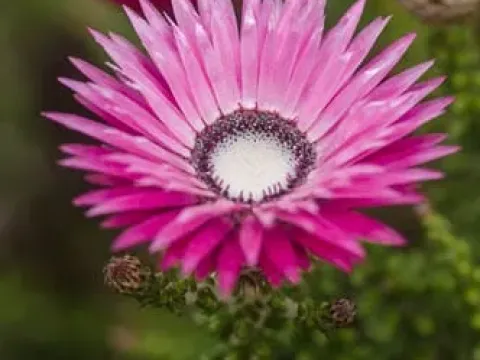
Phaenocoma
Phaenocoma
Propagation of Phaenocoma is typically achieved through seeds sown in late winter or early spring in a controlled environment. The seeds require a well-draining, sandy-peat substrate with a neutral pH to ensure optimal germination success.
What the section contains

Phaenocoma
Surface sowing is recommended as the seeds need exposure to light for activation. Lightly covering them with a thin layer of fine vermiculite helps maintain essential moisture without restricting the light needed for development.
Temperature control is critical during the initial growth phase, ideally maintaining a range between 18 and 22 degrees Celsius. Proper ventilation is also necessary to prevent damping-off, a common issue for young seedlings.
Seedlings should be transplanted into individual pots once they reach a sturdy size. This practice reduces root disturbance, which is vital for the plant's future resilience when moving to its final outdoor location.
Hardening off the plants for several weeks before the final planting is essential. This acclimatization process allows the crop to adapt to outside conditions and significantly increases survival rates after transplanting.
As a member of the Asteraceae family native to South Africa, Phaenocoma thrives in full sun exposure. It is a specialist plant that demands high light intensity to maintain its characteristic structure and vibrant flowering.
The soil must be exceptionally well-drained and nutrient-poor. Sandy soils that mimic its natural Cape environment are ideal; heavy or water-retentive soils will lead to root rot and inevitable plant failure.
Water requirements are relatively low, as the plant is well-adapted to arid conditions. It is safer to underwater than to overwater, especially in established plants that have developed deep, efficient root systems.
Fertilization should be handled with caution, as high-nutrient soils often result in excessive green growth at the expense of floral production. Low-strength balanced fertilizers can be applied sparingly only if growth appears severely stunted.
Good air circulation is paramount for disease prevention. In regions with high ambient humidity, growing Phaenocoma in a greenhouse or an open, wind-exposed area is necessary to keep the foliage dry and healthy.
The primary threats to Phaenocoma are fungal pathogens caused by high humidity or poor soil drainage. Root rot and grey mold (Botrytis) are the most significant risks during periods of excessive rainfall.
Aphids and spider mites may occasionally infest the plants, particularly when grown in sheltered, dry greenhouse conditions. Regular monitoring of the underside of leaves is recommended for early detection.
Overcrowding plants can lead to mildew development. Maintaining proper spacing ensures that the plants receive adequate airflow, which is the most effective biological defense against fungal colonization.
Root zone pests, such as soil-borne larvae, can damage young plants. Using sterilized growing media during the nursery stage significantly mitigates this risk and ensures a clean start for the crop.
To combat these threats, a combination of cultural practices, such as precise watering and physical spacing, is always preferable to chemical intervention for this specific ornamental crop.
Harvesting Phaenocoma for the dried flower market requires precise timing. The stems should be cut when the flowers are fully opened but before the centers begin to mature or show signs of seed production.
Optimal harvest time is midday on a dry, sunny day. Ensuring the absence of dew or rain moisture is essential to prevent discoloration and fungal growth during the drying process.
The stems should be bundled and hung upside down in a dark, well-ventilated space. This method allows the moisture to evaporate naturally while the flowers retain their structural integrity and vibrant colors.
Drying usually takes about two weeks depending on local humidity levels. Once fully dried, the flowers take on a papery, rigid texture that is indicative of a successful and high-quality harvest.
Once dry, the flowers should be stored in a cool, dark environment to prevent fading. With proper care, these everlasting flowers can maintain their aesthetic value for a significant period in decorative floral arrangements.